Showing posts with label Georgia. Show all posts

Saturday, October 2, 2021

Happy Belated 97th Birthday President Carter

This is a post I wrote on President Jimmy Carter in 2010, when I visited his birthplace in Georgia.  Yesterday, Mr. Carter celebrated his 97th birthday.  He is our longest lived ex- President.

Mr. Carter still lives outside Americus, Georgia in a modest house on a family compound.  He taught  Sunday School until last year.  He has been active in Habitat for Humanity for many years, helping to build over 4300 houses.

 
More recently (2015), Carter has been treated for melanoma that spread into his brain. He also has an extensive history of pancreatic cancer, the cancer that Jeopardy host Alex Trebek bravely battled before his death in 2020.

Whether or not you supported Carter when he was President, I think you would admit that he's had quite a life of accomplishment after leaving office in 1981.  Here are some fun facts about him.

Here's my 2010 post. I've reposted it a number of times - in fact, it may be my #1 reposted post.

They called him....

The Peanut President

Jimmy Carter has always fascinated me.  He came seemingly out of nowhere, seemed to have what it took to be President, but once he got into office he never succeeded.  Yet, in private life, he has succeeded beyond what may have been his wildest dreams.

What in his upbringing, what in his childhood values, what in his education made this man?

And why has this area of Georgia grown organizations such as Habitat for Humanity and others?  What here was so special?

We are visiting the Americus/Plains area to find out. In this blog entry I am concentrating on Jimmy Carter the man.

This is the house that Jimmy Carter grew up in.


Jimmy Carter grew up outside of Plains, GA in a solidly middle class family.  The actual town, which no longer exists, was called Archery.  The realities of rural life in those days created a childhood of lots of hard physical labor.  His father, loving as he was, did not believe in keeping anything on the farm that did not "pay its own way".   And this was hard farming, although the Carters were rich enough to have tenant farmers.  Still, Jimmy worked side by side with area black farmers, performing distasteful chores such as "mopping cotton".

"Miss Lillian", Jimmy's mother, was a nurse who did not turn anyone away, black or white.

Jimmy's father encouraged Jimmy to work and play alongside of the local black farmers.

The Carters grew cotton, peanuts, and sugar cane.  Student farmers still raise these crops at the homestead today.  They kept goats for meat, and mules to plow the fields.

In this windmill, is the germ of using "alternate energy".  There is nothing new about windpower.


The Plains High School the Carters attended has been closed (as part of consolidating various school districts).  This is a classroom set up the way it would have looked for Jimmy Carter in the 7th grade. Like so many famous people, Jimmy Carter credits a high school teacher, Miss Julia Coleman, as another great influence on his life.  In 1940 Eleanor Roosevelt invited her to the White House to honor her.  I highly recommend reading about her life.


 This is the outside of the high school.

Plains was the "Big City" for Jimmy Carter.  This is what it looks like today:

Jimmy Carter lives just outside of Plains today, and when he is in town, teaches Sunday School at his church.  This is Jimmy Carter's "Church Home".

When we had first planned our trip, Mr. Carter was not supposed to be in town but this has since changed. We weren't able to change our plans but it certainly would have been interesting.

So, Mr. Carter - we wish you many years of quality life to come.


Tuesday, November 12, 2019

Jimmy Carter

I have repeated this blog post several times since I first wrote it in 2010.  One of those times was ths past March.

I'm moved to blog once again about our oldest living President, Jimmy Carter, age 95.  He had a number of falls recently, and is having brain surgery this morning to relieve pressure on his brain caused by fluid buildup.

We wish him the best outcome. 

James Earl Carter still lives outside Americus, Georgia in a modest house on a family compound.  At least up to now, he still teaches Sunday School and visitors can come and participate in the class.  (If you do, unpaid plug, you might want to consider this wonderful Bed and Breakfast.

More recently (2015), Carter has been treated for melanoma that spread into his brain. He also has an extensive history of pancreatic cancer, the cancer that Jeopardy host Alex Trebek is receiving treatment for.   


Once again, my post from 2010.


They called him....

The Peanut President

Jimmy Carter has always fascinated me.  He came seemingly out of nowhere, seemed to have what it took to be President, but once he got into office he never succeeded.  Yet, in private life, he has succeeded beyond what may have been his wildest dreams.

What in his upbringing, what in his childhood values, what in his education made this man?

And why has this area of Georgia grown organizations such as Habitat for Humanity and others?  What here was so special?

We are visiting the Americus/Plains area to find out. In this blog entry I am concentrating on Jimmy Carter the man.

This is the house that Jimmy Carter grew up in.


Jimmy Carter grew up outside of Plains, GA in a solidly middle class family.  The actual town, which no longer exists, was called Archery.  The realities of rural life in those days created a childhood of lots of hard physical labor.  His father, loving as he was, did not believe in keeping anything on the farm that did not "pay its own way".   And this was hard farming, although the Carters were rich enough to have tenant farmers.  Still, Jimmy worked side by side with area black farmers, performing distasteful chores such as "mopping cotton".

"Miss Lillian", Jimmy's mother, was a nurse who did not turn anyone away, black or white.

Jimmy's father encouraged Jimmy to work and play alongside of the local black farmers.

The Carters grew cotton, peanuts, and sugar cane.  Student farmers still raise these crops at the homestead today.  They kept goats for meat, and mules to plow the fields.

In this windmill, is the germ of using "alternate energy".  There is nothing new about windpower.


The Plains High School the Carters attended has been closed (as part of consolidating various school districts).  This is a classroom set up the way it would have looked for Jimmy Carter in the 7th grade. Like so many famous people, Jimmy Carter credits a high school teacher, Miss Julia Coleman, as another great influence on his life.  In 1940 Eleanor Roosevelt invited her to the White House to honor her.  I highly recommend reading about her life.


 This is the outside of the high school.

Plains was the "Big City" for Jimmy Carter.  This is what it looks like today:

One day I hope to return to Americus, and experience the area that shaped this humanitarian.


So sad to see falls impact the life of still another aging great American.

Saturday, March 23, 2019

Celebrating The Oldest Former President Jimmy Carter

Here is a post I wrote on Jimmy Carter in 2010, when I visited his birthplace in Georgia.  Yesterday, Jimmy Carter became our longest lived President.

He still lives outside Americus, Georgia in a modest house on a family compound.  He still teaches Sunday School and visitors can come and participate in the class.  (If you do, unpaid plug, you might want to consider this wonderful Bed and Breakfast.

More recently (2015), Carter has been treated for melanoma that spread into his brain. He also has an extensive history of pancreatic cancer, the cancer that Jeopardy host Alex Trebek is receiving treatment for. 


They called him....

The Peanut President

Jimmy Carter has always fascinated me.  He came seemingly out of nowhere, seemed to have what it took to be President, but once he got into office he never succeeded.  Yet, in private life, he has succeeded beyond what may have been his wildest dreams.

What in his upbringing, what in his childhood values, what in his education made this man?

And why has this area of Georgia grown organizations such as Habitat for Humanity and others?  What here was so special?

We are visiting the Americus/Plains area to find out. In this blog entry I am concentrating on Jimmy Carter the man.

This is the house that Jimmy Carter grew up in.


Jimmy Carter grew up outside of Plains, GA in a solidly middle class family.  The actual town, which no longer exists, was called Archery.  The realities of rural life in those days created a childhood of lots of hard physical labor.  His father, loving as he was, did not believe in keeping anything on the farm that did not "pay its own way".   And this was hard farming, although the Carters were rich enough to have tenant farmers.  Still, Jimmy worked side by side with area black farmers, performing distasteful chores such as "mopping cotton".

"Miss Lillian", Jimmy's mother, was a nurse who did not turn anyone away, black or white.

Jimmy's father encouraged Jimmy to work and play alongside of the local black farmers.

The Carters grew cotton, peanuts, and sugar cane.  Student farmers still raise these crops at the homestead today.  They kept goats for meat, and mules to plow the fields.

In this windmill, is the germ of using "alternate energy".  There is nothing new about windpower.


The Plains High School the Carters attended has been closed (as part of consolidating various school districts).  This is a classroom set up the way it would have looked for Jimmy Carter in the 7th grade. Like so many famous people, Jimmy Carter credits a high school teacher, Miss Julia Coleman, as another great influence on his life.  In 1940 Eleanor Roosevelt invited her to the White House to honor her.  I highly recommend reading about her life.


 This is the outside of the high school.

Plains was the "Big City" for Jimmy Carter.  This is what it looks like today:

Jimmy Carter lives just outside of Plains today, and when he is in town, teaches Sunday School at his church.  This is Jimmy Carter's "Church Home".

When we had first planned our trip, Mr. Carter was not supposed to be in town but this has since changed. We weren't able to change our plans but it certainly would have been interesting.

So, Mr. Carter - we wish you many years of quality life to come.

Sunday, February 10, 2019

The Sign

It all started with a sign. 

In 2006, I rode the Auto Train for the first time. I traveled with my family from northern Virginia to just north of Orlando, Florida one August.  (I've made this train trip south several more times now, the most recent trip being about three weeks ago.)

I've never slept well on the Auto Train, and something happened on that first trip that became a tradition.

I woke up from a fitful sleep to realize we were traveling through a city.  We were passing under an Interstate, and some large billboards were visible.  One billboard, lit up, advertised "The Crab Shack. Tybee Island."

I didn't have Internet access and had never heard of Tybee Island. But I researched it as soon as I could and found it was an island close to Savannah, Georgia.

The second trip, 2009:  I woke up from a fitful sleep, and as my spouse softly snored next to me, I peeked out of the window and saw the very same sign.

It was a sign, that sign!  I was being told to eat at the Crab Shack.  We were supposed to drive through Savannah on the way home but had car trouble, and had to take the Auto Train home.  We swore we would visit Savannah and we did (in 2011) but we never got to eat at the Crab Shack.

On our third trip, in March 2013, we both woke up as we were traveling through Savannah, and my spouse spotted the sign even before I did.  Marveling at this huge (to our sleep-bleary eyes) sign, we decided that yes, we would go to the Crab Shack.  We would fill in this hole in our travels on the way back (by car, this time).

So on March 12, 2013, we filled in the hole, and I blogged a while back about it.
From the outside, it looks a bit like a "tourist trap".  But the food (noting I do not get compensated for this or any other review) was very good.
Inside, I noticed the restaurant had open walls to the outside - with only a screen between diners and the great outdoors.  If only I could live in a place like that, said my winter-starved inner voice.
Not so fast, said reality, as I saw movement outside the screened in wall.  Can you see what I saw?

After lunch we went outside, to see some of the 78 alligators the Crab Shack owns. These are all domestic, as in "born in captivity".  The Shack does not tolerate any abuse of the gators by customers, but they were easily accessible (if someone dared) and I hope they have good lives.
Up close, they almost look fake - but they certainly were not fake.

Postscript - our next trip to Florida was in January of 2018.  We took the Auto Train both ways.  On the way south, we never saw the sign.  Returning home, we did.  It was a different sign, but we think it was in the same place.  Seeing that sign gave us so much comfort.

But this past January (2019) - no sign, either way.

So I did what any blogger would do.  I emailed the restaurant.

And the next day I received a response!  I hope Stephanie doesn't mind me quoting from the email.

"Thank you for contacting us!  We are happy to hear that our billboard is so eye-catching to you, and that you have so many fond memories of dining with us!  Rest assured, our billboard is still there - perhaps it was down at the time of your last travel for replacement.  The elements can be quite harsh on the vinyl used on the billboards and they do occasionally need to be updated and replaced.  Be sure to look for it on your next trip, and we look forward to your next visit here with us on Tybee Island!" (along with this was an offer to visit their website and see a shipping special they had for a special Valentine's Day meal.)

Stephanie, you bet we will be back!

Tuesday, November 27, 2018

Polio and the President

Polio.
With a paralytic disease called AFM striking some children in the past several years, I wanted to blog a little about a scourge of my early childhood that, hopefully, will never reappear in our lifetimes.

I visited Warm Springs, Georgia in March of 2010 and saw the Little White House where Roosevelt died, the unfinished portrait that still sits in the house, and the pools where Roosevelt had found relief from his polio.  

Yes, Roosevelt was a disabled man in a time were disabled people were disrespected and discriminated against - so much so that Roosevelt had to hide the fact that he depended on a wheelchair for mobility.

Otherwise, people might have thought he was unfit for office.

That would be totally inconceivable today - but those were very different times.  Still, Franklin Roosevelt, who contracted polio at the age of 39,  had a large role in making disability acceptable, and gave hope to a lot of people with polio.  Ever hear of the March of Dimes?  It started as a movement to find a cure for polio

At the time of his death, polio was a feared scourge.  I can vaguely remember the panic that was felt during the summer - the peak time for polio. Parents would even keep their children away from public swimming pools, as it was believed that pools were one place you could "catch" polio.  As children, we believed that being near a storm drain could give you polio.

Some children became so paralyzed that they could no longer breathe on their own.  My generation remembers a device called an iron lung.

But then everything changed.

A charity called The March of Dimes was founded by Franklin Roosevelt in 1938..  Roosevelt had a simple idea- asking Americans to send in a dime, just one dime, to fight polio.  The "march" of dimes helped to finance research, so that the Salk and Sabin vaccines could be developed.   In honor of Roosevelt's fund raising, his face appears on the dime and has appeared for many years.

Ironically, Roosevelt's polio may have been misdiagnosed - but many people alive today can be grateful for that misdiagnosis.

I may have been one of those young children in those old black and white photos lining up in schools for their polio shot.  I even vaguely remember being in one of those lineups.

I was a member of the first generation in human history that did not have to fear polio.   And to my son, polio is just a historical curiosity - although one of his older cousins married a woman who had polio as a child, and has a noticeable limp to show for it.

And yes, there is still a Roosevelt Institute for Rehabilitation in Warm Springs.

If you need a story on how one person can change history, and enrich the lives of millions, you need look no further than this story.

And we all hope a cure is found for AFM soon before more children are stricken.

Thursday, May 31, 2018

Throwback Thursday - A Key to Binghamton's Future?

I blogged this in 2010 after a visit to Macon, Georgia.  Why did we travel  over 800 miles from near Binghamton, New York to Macon?  And what does this has to do with a possible urban renewal in nearby Johnson City, New York.

Short answer:  Flowers.  Read now about Macon, and come back this weekend to read more about what Johnson City, New York is attempting to do.

Now, my spring, 2010 post with some editing:
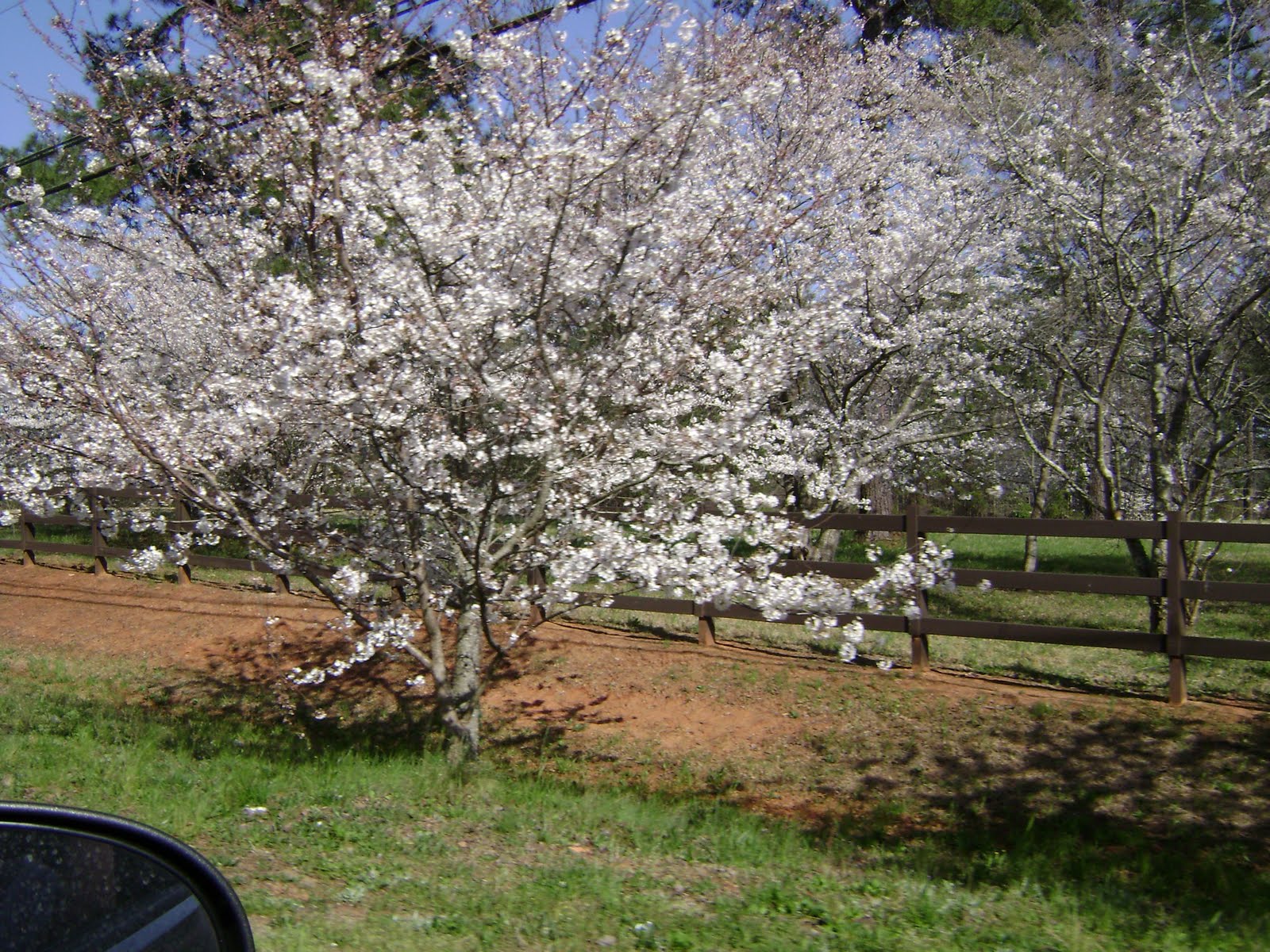
I think even boosters of Macon, Georgia will admit that their urban renewal efforts have not all worked.  Walking around downtown, we passed many boarded up businesses.  Some blocks looked less than exciting.  But while we were there, thousands of people poured into Macon to celebrate -cherry blossoms.  Two city parks were jammed with people.  There was an awesome arts and crafts festival in Third Street Park that we spent hours in.

And Macon was beautiful.  In some neighborhoods, driving was like driving through clouds of pink and white blossoms.  Here are several tree pictures I took, which do not at all express the beauty of what we saw.  The first picture may be of a different cherry variety, not a Yoshino, but it was beautiful.


Yes, these are the same type of cherry tree that Washington, DC boasts.

So, how does this figure into a possible urban renewal for Binghamton?

Let's look first at Washington, DC, which has the more famous festival.  It is estimated that the Washington, DC Cherry Blossom Festival brings in over 126 million dollars to the area.  It attracts an estimated 1 million visitors to the area, too.  Not bad.

Next, let's look at Macon.  Macon's population in 2010 was only around 93,000. (Binghamton's is around 47,000.) But, the 10 day long festival we just attended brought in a lot of people, too  And, last year, it also brought in an estimated 12 million dollars.  People come for the cherry blossoms and stay for many area attractions.

What makes the Macon festival ironic in a way is that it all started out with a mislabeled dogwood tree.  Macon is zone 8 (gardeners will know what that means) and a bit south for cherry trees.  But a local real estate developer (so the story goes), bought a mislabeled dogwood tree around 1947 and planted it.  Totally puzzled by what he got, he found out when he visited Washington, DC in 1952, saw their Yoshino cherry trees in bloom, and realized that was what he had purchased.

This man, Bill Fickling, saw a good thing and started propagating the trees-and one of the people he gave them to, in turn, talked to Mr. Fickling about planting them all over Macon.  He propagated them further and started giving them away.  So now Macon has about 300,000. of  these trees.  Some of the Macon trees have even ended up in Washington DC.

Bill Fickling, known as the "Founder", was honored at the 2010 Cherry Blossom festival with giveaways of cherry ice cream, Coca-Cola (a drink native to GEorgia) and cake.  Homeowners get into the spirit too, putting pink ribbons on their doors and even painting cherry blossoms onto store windows.  (And putting pink poodle ornaments on their lawns, but that is another story.)

So, should Binghamton have its own festival?  I say "yes"!

Binghamton could sure use that kind of money.

My question is simply this:  what if thousands of blooming trees were planted in and around downtown Binghamton?  And what if various festivals were held at the same time? And tours?

What if Binghamton offered tours of historic downtown buildings at the same time?  We certainly have them:  the Perry Building, the Security Mutual building, just to name two.

Flowering cherries may not be the best choice.  Although what I found in researching indicates they should grow in Binghamton's climate zone (zone 5) I have a feeling it may be a little iffy.  Although, we do have various flowering cherries here.

If not cherry trees, flowering crabapples may be another choice.  They come in both pink and white.  Cornell Extension could help to pick the correct tree or trees to use.

Our trees bloom later, so would not compete with either DC nor Macon.  We might be looking at a late April or early May date.

At the same time, tours could be given of various downtown historical buildings.  We don't have antebellum treasures like Macon, but we have our own treasures.  Examples downtown include the Security Mutual building, the Perry Building, and the Kilmer Building.

No, we don't have anything like Macon's Hays House, but we have Phelps Mansion, on the edge of downtown. 

We don't have St. Joseph's Church (another Macon landmark) but we do have Christ Episcopal, designed by the same man who designed Trinity Church in Manhattan.

In fact, we have trolleys here that can be used for tour purposes.  Just like they do in Macon.

July Fest, a downtown arts and crafts festival held in (yes) July, could be moved to early May and expanded.

We need to get people into downtown, and if flowering trees work for Washington DC and for Macon, Georgia, why not Binghamton?

Why not?  What is there to lose?

(In the near future - although Binghamton is finding its way back in 2018, nearby Johnson City languishes - but a farsighted businessman may have found a solution.)

Saturday, May 12, 2018

Throwback Saturday - Polio and a President

I originally posted this on April 12, 2012.  And I figured that you, dear reader, would want a break from my several consecutive days of posting flower pictures.

(But no worries - I'll be back Sunday with more flowers, just in time for Mother's Day.)

Several days ago, I read a blog post that touched on The March of Dimes charity and the late President Franklin Roosevelt who had (or may not have had) a once dreaded disease called polio.
On the anniversary of Franklin Roosevelt's sudden death on April 12, 1945, I blogged about a scourge of my early childhood that, hopefully, will never reappear in our lifetimes.  This post follows:

I visited Warm Springs, Georgia in March of 2010 and saw the Little White House where Roosevelt died, the unfinished portrait that still sits in the house, and the pools where Roosevelt had found relief from his polio.  Yes, Roosevelt was a disabled man in a time were disabled people were disrespected and discriminated against - so much so that Roosevelt had to hide the fact that he depended on a wheelchair for mobility.

Otherwise, people might have thought he was unfit for office.

That would be totally inconceivable today - but those were very different times.  Still, Franklin Roosevelt had a large role in making disability acceptable, and gave hope to a lot of people with polio.  Ever hear of the March of Dimes?  It started as a movement to find a cure for polio

At the time of his death, polio was a feared scourge.  I can vaguely remember the panic that was felt during the summer - the peak time for polio. Parents would even keep their children away from public swimming pools, as it was believed that pools were one place you could "catch" polio.  As children, we believed that being near a storm drain could give you polio.

But then everything changed.

A charity called The March of Dimes was founded by Franklin Roosevelt in 1938..  Roosevelt had a simple idea- asking Americans to send in a dime, just one dime, to fight polio.  The "march"of dimes helped to finance research, so that the Salk and Sabin vaccines could be developed.   In honor of Roosevelt's fund raising, his face appears on the dime and has for many years.

Ironically, Roosevelt's polio may have been misdiagnosed - but many people alive today can be grateful for that misdiagnosis.

 I was one of those young children in those old black and white photos lining up in schools for their polio shot.

I was a member of the first generation in human history that did not have to fear polio.   And to my son, polio is just a historical curiosity - although one of his older cousins married a woman who had polio as a child, and has a noticeable limp to show for it.

I realized, in researching my blog, that I had never published my photos of Warm Springs, and I hope to fix that in the near future.  And yes, there is still a Roosevelt Institute for Rehabilitation in Warm Springs.

If you need a story on how one person can change history, and enrich the lives of millions, you need look no further than this story.

Tuesday, December 13, 2016

Dreaming of Spring Already


In my world of dreams, I would love to be in a place like Americus, Georgia right now.  As I write this post, I'm listening to a weather report predicting near zero temperatures (Farenheit, not Celsius) later this week here in upstate New York.
One day, spring will return
In Americus, Georgia, I imagine that the sun is shining, a Chinese lantern flower or two is blooming, and coffee from Cafe Campesino is brewing.  It was in the high 60's (about 18 C) yesterday.

But, all is not calm.  This past week, Americus also suffered a tragedy.  Two police officers were killed by a suspect in a domestic violence dispute, who, in turn, killed himself hours later.

The officers had grown up together, and were good friends.  Living in a smallish community myself, I can mourn with the people of Americus and the couple who own the bed and breakfast where my spouse and I stayed on our one visit to Americus.

I have blogged several times about the Americus area.  It isn't that far from Andersonville, the most notorious prison in our American Civil War.  And it isn't that far from Plains, Georgia, where former President Jimmy Carter grew up.  It is where the non profit Habitat for Humanity started.  There are other stories in Americus - some inspiring, some showing more of the evil side of humankind.


Perhaps one day, we will return.  It is a fascinating place.  And the owner of this bed and breakfast takes such wonderful nature and flower photos.


In turn, here is a picture I took of our room (which has since been remodeled) in the Americus Garden Inn years ago when we stayed there. Due to circumstances, it may be a while before we stay in a bed and breakfast again.
If you are ever in the area, I hope you will visit Americus (and if you can't, do enjoy the blog written by the owners of the Americus Garden Inn.)

In the meantime, I can dream, can't I?

Saturday, June 4, 2016

Throwback Saturday - Filling in a Hole


I originally wrote this post in March of 2013, during a late winter vacation.  A fellow blogger's post about a restaurant in Tybee Island, Georgia, inspired me to rerun this post.  Two different opinions about the same restaurant.  Small world.  Now, the post:

In 2006, I rode the Auto Train for the first time. I traveled with my family from northern Virginia to just north of Orlando, Florida one August.  (I've made this train trip south three times now, the most recent trip being a week and a half ago.)

I've never slept well on the Auto Train, and something happened on that first trip that has become a tradition.

I woke up from a fitful sleep to realize we were traveling through a city.  We were passing under an Interstate, and some large billboards were visible.  One billboard, lit up, advertised "The Crab Shack. Tybee Island."

I didn't have Internet access and had never heard of Tybee Island. But I researched it as soon as I could and found it was an island close to Savannah, Georgia.

The second trip, 2009.  I woke up from a fitful sleep, and as my spouse softly snored next to me, I peeked out of the window and saw - the very same sign.

It was a sign (literally)!  I was being told to eat at the Crab Shack. 

We were supposed to drive through Savannah on the way home but had car trouble, and had to take the Auto Train home.  We swore we would visit Savannah and we did (two years ago) but we never got to eat at the Crab Shack.

This Auto Train trip, earlier in March, we both woke up as we were traveling through Savannah, and my spouse spotted the sign even before I did.  Marveling at this huge (to our sleep-bleary eyes) sign, we decided that yes, we would go to the Crab Shack.  We would fill in this hole in our travels.

So yesterday, we filled in the hole.

From the outside, it looks like a "tourist trap".  But the food (noting I do not get compensated for this or any other review) was good.
Inside, I noticed the restaurant had open walls to the outside - with only a screen between diners and the great outdoors.  If only I could live in a place like that, said my winter-starved inner voice.
Not so fast, said reality, as I saw movement outside the screened in wall.  Can you see what I saw?

No, they weren't lunch
After lunch we went outside, to see some of the 78 alligators the Crab Shack owns. These are all domestic, as in "born in captivity".  The Shack does not tolerate any abuse of the gators by customers, but they were easily accessible (if someone dared) and I hope they have good lives.
Up close, they almost look fake - but they certainly were not fake.

Have you ever eaten in a restaurant because of something you kept seeing?

Thursday, August 13, 2015

Throwback Thursday - The Peanut President

I have visited several United States Presidential birthplaces or childhood homes.  The varied backgrounds of our Presidents are always a source of amazement for me.

Yesterday, we in the United States were saddened by the news that a former President, Jimmy Carter, has been diagnosed with cancer.  He had been operated on earlier this month for a mass in his liver.  Wherever the cancer started, it has spread.  The doctors may never find where the cancer originated.

President Carter, 90, has to "rearrange his schedule" for cancer treatment.  That is the kind of age 90 I admire - an age 90 of making a difference in the world with travel, charitable work, and even teaching Sunday School.

Here is a post I wrote on Jimmy Carter in 2010, when I visited his birthplace in Georgia.

They called him....

The Peanut President

Jimmy Carter has always fascinated me.  He came seemingly out of nowhere, seemed to have what it took to be President, but once he got into office he never succeeded.  Yet, in private life, he has succeeded beyond what may have been his wildest dreams.

What in his upbringing, what in his childhood values, what in his education made this man?

And why has this area of Georgia grown organizations such as Habitat for Humanity and others?  What here was so special?

We are visiting the Americus/Plains area to find out. In this blog entry I am concentrating on Jimmy Carter the man.

This is the house that Jimmy Carter grew up in.


Jimmy Carter grew up outside of Plains, GA in a solidly middle class family.  The actual town, which no longer exists, was called Archery.  The realities of rural life in those days created a childhood of lots of hard physical labor.  His father, loving as he was, did not believe in keeping anything on the farm that did not "pay its own way".   And this was hard farming, although the Carters were rich enough to have tenant farmers.  Still, Jimmy worked side by side with area black farmers, performing distasteful chores such as "mopping cotton".

"Miss Lillian", Jimmy's mother, was a nurse who did not turn anyone away, black or white.

Jimmy's father encouraged Jimmy to work and play alongside of the local black farmers.


The Carters grew cotton, peanuts, and sugar cane.  Student farmers still raise these crops at the homestead today.  They kept goats for meat, and mules to plow the fields.

And, in this windmill, is the germ of using "alternate energy".  There is nothing new about windpower.

The Plains High School the Carters attended has been closed (as part of consolidating various school districts).  This is a classroom set up the way it would have looked for Jimmy Carter in the 7th grade. Like so many famous people, Jimmy Carter credits a high school teacher, Miss Julia Coleman, as another great influence on his life.  In 1940 Eleanor Roosevelt invited her to the White House to honor her.  I highly recommend reading about her life.


 This is the outside of the high school.


Plains was the "Big City" for Jimmy Carter.  This is what it looks like today:

Jimmy Carter lives just outside of Plains today, and when he is in town, teaches Sunday School at his church.  This is Jimmy Carter's "Church Home".

When we had first planned our trip, Mr. Carter was not supposed to be in town but this has since changed. We won't be able to change our plans but it certainly would have been interesting.

The Carters also raise a lot of money by auctioning various belongings, momentos, and even paintings.

So, what about this childhood made Jimmy Carter so special?  Didn't many other Georgians had a similar rural childhood?  Not exactly.  There were Jimmy's parents, the hard work ethic instilled in him, his travel in Navy service.  But what else?  The Americus area has something very special, and you can find out more about Americus by reading some of my other posts from 2010.

Sunday, July 19, 2015

Civil War Sunday - Robert E. Lee 's First Assignment

Today, for Civil War Sunday, I'd like to return to a post from 2013, when I blogged about a man who is now in the news due to the recent tragic events in Charleston - Robert E. Lee.

Hopefully, I will be able to post a new Civil War Sunday in a few weeks.  In the meantime, I thank everyone for their patience during this difficult time for some in my family - I have not been responding to comments but please know that I read them as I moderate my blog, and appreciate your readership.

Civil War Sunday - Robert E. Lee - Engineer

Have you ever wondered what the "main players" in the United States Civil War did before the Civil War?

Some of them were career military people.  Some of them came from unlikely walks of life.

There is also the unlikely first military assignment of General Robert E. Lee.

Not long after his graduation from West Point and the death of his beloved mother, Lee was ordered to Cockspur Island, at the mouth of the Savannah River, in the Georgia low country near Tybee Island.  His mission:  to take this marshy and low-lying island, and do what it would take for a fort to be built there.

Yes, Robert E. Lee was - a civil engineer.  He was also a talented artist.
The drawings on the right of this explanatory sign were made by Robert E. Lee during his Cockspur Island duty and sent to lady friends back in Savannah.

This is one of the engineering drawings made by Lieutenant Robert E. Lee.

And what of the Fort?  Yes, it was built.  Its name is Fort Pulaski, and it still stands today, on Cockspur Island.

This is a picture of Ft.Pulaski in 2013, when I visited it.

Ft. Pulaski played several roles during the Civil War.  It was captured in April of 1862 by the Federals,and remained in their control for the rest of the war.  Towards the end of the Civil War a portion of the fort was used as a POW camp by the Union, which leads to the story of the Immortal 600.  That will be a post for another time. (that's what I promised in 2013 - I will see what I can do to make it a reality.)

A picture of the original door,still in use.


This is Cockspur Island today. Some parts of it look stark, like the picture above.  But other parts are forested - a forest created by the ecological changes produced by the military under the direction of Robert E. Lee.

I visited the fort to see a Civil War fort and came away with a whole lot more.  There were nature trails and other places to explore; it's a wonderful day to spend part of a day if you love history.

Friday, April 10, 2015

Impossible

I dream the Impossible dream, on this I day of the Blogging from A to Z Challenge.

My theme is America the Beautiful.  Today, I blog about a flower that creates beauty in many parts of the United States.

Look upon this beautiful flower.  It is called a Camilla.
Camden, South Carolina, 2015

Here is another.
 Summerville, South Carolina, 2014
By now, you are asking why I am using this for my "I" post.  Well, the theme for today is Impossible.

I fell in love with camellias for the first time in 2010, when I visited Americus, Georgia in late March.  I saw shrubs in bloom with what seemed to be roses.  But they obviously weren't roses.

I pondered what the flowers were, and then it came to me.

They were camellias.  They bloom through the winter in some places.  The plants have beautiful evergreen foliage. They have been my dream plant in years, as in "dream on".

Where I live, in upstate New York, we don't have much of anything in bloom in late March.

The common wisdom says camillas are impossible to grow where I live.  I am positive I saw a camellia blooming once in Brooklyn, which is USDA zone 6b, but would be pushing it, even for the most hardy of Camillas.  In my zone 5b garden, they would be a no go.

Or, would they?  After reading an article in the NY Times about camillas, my heart started to beat faster.  Because there is a camilla nursery near Chapel Hill, North Carolina.  A camilla nursery the author of the article trusts.  And (be still my heart) they had a single white camilla called Survivor.  It's rated to zone 6A.

With protection, would it grow for me in my zone 5b garden? (we got to -8 at my house this winter.)  Would I travel to Chapel Hill  to buy one of these plants, bring it home, and try the impossible?
Yes, we would.  And we did.  Meet April Rose, the hardiest camilla the nursery said they sold.

She (and yes, to me the plant is a "she") wasn't in bloom, but she had several buds.  So we bought her, and we carried her around on a vacation.  During that time, her first bloom opened.

Now, our job is to keep her alive through next winter.  On Pinterest, I found a photo of another April Rose pinned by someone on Cape Cod, which is northeast of us, in Massachusetts.

Maybe we can do it, too.

Thrive, April Rose, Thrive!  Make my Impossible Dream come true!