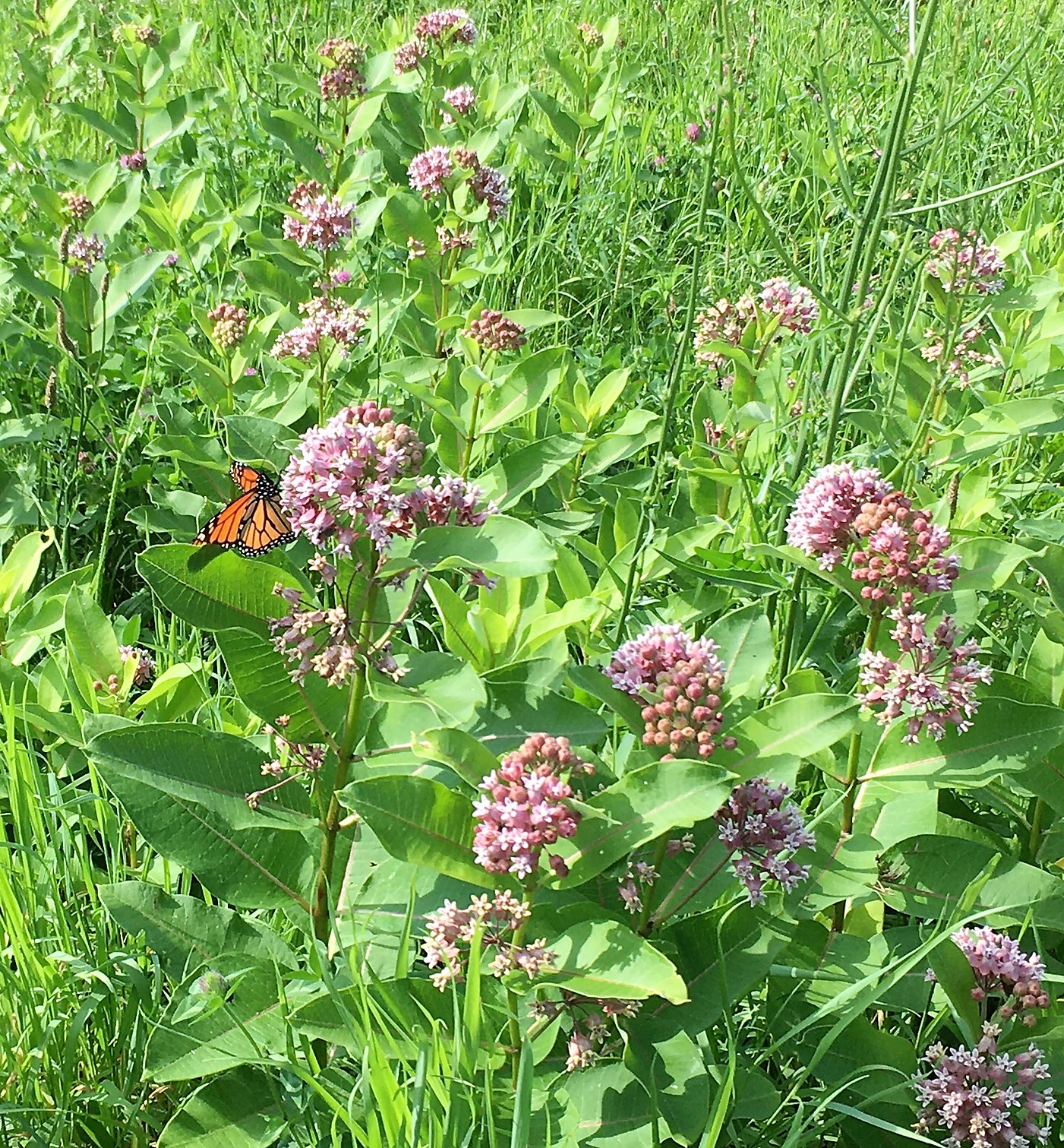
Not every moment of the pandemic (for me) has been bad. It's led to some discoveries that I may never have stumbled across except for the fact that I needed a nearby place to walk during the lockdown. After it was over, we kept walking there on occasion.
It is in a low place adjacent to the Susquehanna River, and is bordered by a floodwall. And, on that floodwall, wildflowers grow.
These photos were taken in the past week.
Right now, the milkweed is blooming.
You may have heard of milkweed, a plant that is getting more and more attention as it is the sole food source for monarch butterfly caterpillars. By eating the milkweed's toxic leaves (which, obviously are not toxic to them) the caterpillars become adults who are, in turn, toxic or bad tasting to many who would otherwise eat them.
The flowers are beautiful.
They also have a wonderful scent I wish I could convey to you by smell-o-blog.
But the plants are disappearing in the wild due to loss of habitat, and so are the monarchs.
Here are some of the native milkweeds - at least one, if you live in the United States, is native to your area. Canadian? Here's some information for you.
We are encouraged to grow milkweed but you really need the right place - otherwise it might take over. I have not planted it in my yard. Interestingly, our local Wild Birds Unlimited was offering a small packet of milkweed seeds with purchase. I got one but after reading up, I decided I didn't have the right environment for them. Too bad.
In my three walks during which I took these photos, I only saw one monarch. Last year, there were a lot more. I'm just hoping it's because it's too early for them.
And, to end this post, a monarch (taken in 2017) butterfly on a zinnia.
Yes, milkweed - friend to the monarch, this butterfly of beauty.