Could you imagine an American general leading his troops into battle today?
It might happen, but certainly not to the extent it did in the Civil War. In fact, I read a statistic (true or not) saying that a general had a 50% greater chance of dying in a Civil War battle than a private did.
I bought myself a Civil War calendar at the beginning of this year. Each day lists a fact, not just facts for 1863, but for all years of the war. The fact for January 17 was this:
"Seventy-seven Confederate generals and forty-seven Union generals were killed or mortally wounded in action, meaning 18 percent of Confederate generals and 8 percent of Union generals died from battle wounds."
This is the list of Confederate generals who died (73 by my counting, which differs from the calendar page quote above).
This is the list of Union generals (38 in total, again differing from the calendar page quote.)
Whether the calendar is right or the online lists are right, it is sobering. When I visited Antietam last September for its 150th anniversary, one of the facts presented to us by the historical reenactors was that six generals died in that one battle alone.
Another two died at South Mountain, a battle not long before, whose battlefield I also visited on the 150th anniversary of the battle.
As it happens, the number of generals killed in those two battles were - four from each side.
This is just a fraction of the over 620,000. people who died in the Civil War, of course.
Once again, this makes us ponder just how horrible those four years in our American history were, as are all wars.
And, one ironic fact. Who was the first American general to die in World War II? It was Nathan Bedford Forrest III, the great grandson of a Confederate general.
Sunday, January 20, 2013


Saturday, January 19, 2013
Sustainable Saturday - Deciphering The Messages of Nature
A Saturday, just before a cold spell of weather supposed to be coming our way.
Part of the sustainable lifestyle is paying attention to the messages Nature is trying to send us. Nature does communicate with us (I won't want to get all woo-woo here) and we do not listen to Nature at our peril.
Here it is, January 19 in upstate NY. It is in the 40's (again, after it cooled down and we got snow a couple of times this week) and the snow is melting.
So, spouse and I came home from our food shopping, and what did I see as I walked to our front door but a flying insect. (!) It looked like a large mosquito.
We do have something we call snow bugs that used to come out in the February snow, but I haven't seen them in a few years. This hopefully, was not a termite.
When I went to the back yard to see if we did have snow bugs, I first looked around, at the beauty of the view of the creek behind our house, near its merge point with the Susquehanna River:

And then, I saw this, on the steps to my back door:
 A January fly! In upstate NY! Even in last year's mild winter I never saw one, although, of course, that doesn't mean they weren't there.
Then I looked a little closer. In the melting snow, the garlic foliage was still green, and I saw something sprouting. Not a winter bulb - could have been an onion missed from last year, or more garlic.
 But sprouting it was, nevertheless.
I am trying to figure out this message from Nature. I do know those early insects may have a short life. By Tuesday we are going to have highs in the teens F. (the minus teens, for those using Celsius).
What are your messages from Nature where you live? Are things "out of whack"?
Part of the sustainable lifestyle is paying attention to the messages Nature is trying to send us. Nature does communicate with us (I won't want to get all woo-woo here) and we do not listen to Nature at our peril.
Here it is, January 19 in upstate NY. It is in the 40's (again, after it cooled down and we got snow a couple of times this week) and the snow is melting.
So, spouse and I came home from our food shopping, and what did I see as I walked to our front door but a flying insect. (!) It looked like a large mosquito.
We do have something we call snow bugs that used to come out in the February snow, but I haven't seen them in a few years. This hopefully, was not a termite.
When I went to the back yard to see if we did have snow bugs, I first looked around, at the beauty of the view of the creek behind our house, near its merge point with the Susquehanna River:

Then I looked a little closer. In the melting snow, the garlic foliage was still green, and I saw something sprouting. Not a winter bulb - could have been an onion missed from last year, or more garlic.

I am trying to figure out this message from Nature. I do know those early insects may have a short life. By Tuesday we are going to have highs in the teens F. (the minus teens, for those using Celsius).
What are your messages from Nature where you live? Are things "out of whack"?
Friday, January 18, 2013
Not Repeating Her Mistakes Part 1
My 80-something mother in law is showing me the way.
She may not realize it, but I intend to learn from her. I intend to learn both the things she did right, and the things she did wrong, in preparing to grow old.
The world now differs from the world that existed when she was my age. Information is readily available online. Communication, in a lot of ways, is easier. But she never could have foreseen some of the challenges she faces now.
These are my "Resolutions of Aging": Now, at 60, I want to write these things down, so I can remember them and refer to them. I will devote some posts over the next few weeks/months to this issue, one "resolution" at a time.
The first mistake was not paying attention to balance.
My mother in law taught me that walking is not enough for exercise. She loved to walk. She walked with her late husband. She walked with her friends. But, even while younger, she was prone to falling. She's had balance problems for years. Now it has become deadly. She can no longer walk for long. She is overweight. She struggles with the stairs that are throughout her split level. A small stroke several years ago only compounded the problem, and it came despite the great care she paid to her nutrition.
I walk. I do water aerobics and water zumba. But that is not enough. I've seen deterioration in my own balance just this year, with our first major snowfall - the first in two years- and my ability to navigate snow piled at curbs, for example. An intervention is called for - balance exercises, or even yoga or tai chi. These resources weren't available to my mother in law when she was my age. I, however, have no excuse.
My first step is losing weight (I've now lost 11 pounds thanks to Weight Watchers - the true challenge will be keeping it off) to help out my right knee. From there.....
Next Friday - another Resolution.
If you are of an age where you have to be concerned about your aging - have you taken steps to plan long term care, or physical issues?
She may not realize it, but I intend to learn from her. I intend to learn both the things she did right, and the things she did wrong, in preparing to grow old.
The world now differs from the world that existed when she was my age. Information is readily available online. Communication, in a lot of ways, is easier. But she never could have foreseen some of the challenges she faces now.
These are my "Resolutions of Aging": Now, at 60, I want to write these things down, so I can remember them and refer to them. I will devote some posts over the next few weeks/months to this issue, one "resolution" at a time.
The first mistake was not paying attention to balance.
My mother in law taught me that walking is not enough for exercise. She loved to walk. She walked with her late husband. She walked with her friends. But, even while younger, she was prone to falling. She's had balance problems for years. Now it has become deadly. She can no longer walk for long. She is overweight. She struggles with the stairs that are throughout her split level. A small stroke several years ago only compounded the problem, and it came despite the great care she paid to her nutrition.
I walk. I do water aerobics and water zumba. But that is not enough. I've seen deterioration in my own balance just this year, with our first major snowfall - the first in two years- and my ability to navigate snow piled at curbs, for example. An intervention is called for - balance exercises, or even yoga or tai chi. These resources weren't available to my mother in law when she was my age. I, however, have no excuse.
My first step is losing weight (I've now lost 11 pounds thanks to Weight Watchers - the true challenge will be keeping it off) to help out my right knee. From there.....
Next Friday - another Resolution.
If you are of an age where you have to be concerned about your aging - have you taken steps to plan long term care, or physical issues?
Thursday, January 17, 2013
Three Women in Their 90's
I was going to write about a woman in her 90s today. I don't know the woman. I do know her daughter in law, not well, but I do know her.
Today, these things happened here in the United States.
1. Betty White turned 91.
2. Dear Abby, 94, died.
3. My acquaintance went to DSS to apply for Medicaid for her mother in law. The mother in law had refused to make plans for long term care, to the despair of her children. Last month, the mother in law fell and now needs 24 hour care, at least for the next few weeks. The lack of planning has turned into a family nightmare and my acquaintance bears the brunt of it.
In a way, these stories all have something in common.
Betty White: she is one of the most beloved American actresses. She has been in show business for over 70 years, and I have loved her since the 1960's. My first memories of her were her starring on the game show Password, hosted by a man, Allen Ludden.
Betty ended up marrying her host, who died too young. Betty never remarried.
So many of us baby boomers remember Betty White as Sue Ann Nivens on the Mary Tyler Moore show.
And, there was Betty White's classic "Muffin" sketch on Saturday Night Live just a couple of years ago. I saw it, and it was so funny. I don't dare post it on this PG blog. Even today, at 91, Betty White still appears on TV and has her own TV series. She is incredible, and I love her. She is what all of us dream for if we make it into our 90's.
But not all age 90 stories end well.
On this happy Betty White birthday, we also received news that "Dear Abby", Pauline Phillips, had died, at the age of 94.
Phillips gave up her column of many years in 2002, due to Alzheimer's. It is now written by her daughter. Alzhemier's is everybody's nightmare, no matter where in the world we live. Let us remember Dear Abby for what she accomplished, not how she died.
To young people, I can't quite explain just how important the advice columnist Dear Abby was in our lives back in the 60's. The letters people wrote her, and her responses, were classics.
There was no Internet back then, no texting, no Facebook. How quaint, to write a letter to someone you didn't know, for advice. But millions of people did it, and lived by that advice.
And finally, there's the mother in law of my acquaintance. She wanted to be independent. But she would not work with her children. She didn't want to face what might eventually happen.
So many of us baby boomers today celebrate with Betty White, mourn with the family and fans of Pauline Phillips, and try to be the best caretakers we can be to our elderly family members. We can wish for the 90's of Betty White but sometimes we end up with the 90's of Dear Abby - or, my acquaintance's mother.
Do you have memories of Betty White and Dear Abby? Or find yourselves a caregiver to elderly parents?
Today, these things happened here in the United States.
1. Betty White turned 91.
2. Dear Abby, 94, died.
3. My acquaintance went to DSS to apply for Medicaid for her mother in law. The mother in law had refused to make plans for long term care, to the despair of her children. Last month, the mother in law fell and now needs 24 hour care, at least for the next few weeks. The lack of planning has turned into a family nightmare and my acquaintance bears the brunt of it.
In a way, these stories all have something in common.
Betty White: she is one of the most beloved American actresses. She has been in show business for over 70 years, and I have loved her since the 1960's. My first memories of her were her starring on the game show Password, hosted by a man, Allen Ludden.
So many of us baby boomers remember Betty White as Sue Ann Nivens on the Mary Tyler Moore show.
But not all age 90 stories end well.
Phillips gave up her column of many years in 2002, due to Alzheimer's. It is now written by her daughter. Alzhemier's is everybody's nightmare, no matter where in the world we live. Let us remember Dear Abby for what she accomplished, not how she died.
To young people, I can't quite explain just how important the advice columnist Dear Abby was in our lives back in the 60's. The letters people wrote her, and her responses, were classics.
There was no Internet back then, no texting, no Facebook. How quaint, to write a letter to someone you didn't know, for advice. But millions of people did it, and lived by that advice.
And finally, there's the mother in law of my acquaintance. She wanted to be independent. But she would not work with her children. She didn't want to face what might eventually happen.
So many of us baby boomers today celebrate with Betty White, mourn with the family and fans of Pauline Phillips, and try to be the best caretakers we can be to our elderly family members. We can wish for the 90's of Betty White but sometimes we end up with the 90's of Dear Abby - or, my acquaintance's mother.
Do you have memories of Betty White and Dear Abby? Or find yourselves a caregiver to elderly parents?
Wednesday, January 16, 2013
Winter Wednesday - The Snowy Walk
My boots were made for walking, on this snowy day in the "Triple Cities" of upstate New York.
Join me...
 My journey begins before sunrise as snow comes down. (The ball is glare from a street light.)
 An urban park in downtown Binghamton, NY.

Snow covered plant.

In my home neighborhood, a snow covered rhodie.

Finally, the sun sets near Johnson City, New York.
For those of us in the North, has winter returned to your neighborhood?
Join me...


Snow covered plant.

In my home neighborhood, a snow covered rhodie.

Finally, the sun sets near Johnson City, New York.
For those of us in the North, has winter returned to your neighborhood?
Tuesday, January 15, 2013
Garden Bloggers Bloom Day-Snowpause January 2013
Readers...head on over to find links to gardens from all over the world. You'll see the loveliest flowers, both outdoors (from those lucky folks who still have warm weather) and outdoors.
The May Dreams blogger, who lives in Central Indiana, reported one crocus in bloom (!) and also a snowdrop. No such luck here in upstate New York. Altough our snow cover melted off last week, except for some snow piles here and there, no bulbs braved the warm weather. Around here, they know we do get January thaws. We are cold once again, and are scheduled to have at least an inch of snow tonight.
I do have one plant in bloom - because I bought it recently.

Jacob Lenten Rose is supposed to start blooming in November. I bought this in a supermarket (!). My one Lenten Rose never bloomed after I bought it two years ago, so I decided to try again. The flowers won't be this color if it reblooms next year - this is a color if plants bloom in warm weather. The blooms, next time, should be more of a pink shade.
We planted this out on Sunday (during our thaw) after hardening it off, and so far it is still looking good.


Next, knocking on lots of wood, one of my two phalaenopsis orchids has put out buds. I'm thrilled, first, because I have an extensive track record of killing orchids and second, because I saved this from said white flies.


Last, but not least, my Persian Shield. This is a houseplant in my zone 5a climate. The camera doesn't capture the silvery glint of the leaves. I bought this after our September 2011 devestating flood from Tropical Storm Lee from a nursery that had flooded severely, and was selling salvaged plants at 75% off.
It's no wonder it survived the flood. This plant is supposed to be drought tolerant. Well, not in a dry house it isn't.
It's hard to see, but this plant is starting to bloom. (It has grown substantially since last fall). The flowers are indistinct. I should have pinched the plant more I wonder if I take a few inches off the top (and put it in water) if I will get the cutting to root, and in the meantime will have a plant that branches out more.
What's blooming in your garden or house?
Monday, January 14, 2013
And I Thought I was Directionally Challenged
(Thank you, The Things We Think, Say and Do, for blogging about this Biggest GPS Fail Ever).
Picture this. A 67 year old woman starts to drive from her home in Belgium, intending to pick up her friend at a train station, some 38 (or maybe 43) miles away, also in Belgium. She programs her GPS and off she goes.
Following her GPS, she drives.....and drives....and drives....
Across borders. Into countries where different languages are spoken. She notices the languages of the traffic signs are changing, but "she was distracted". Hours pass.
Needless to say, she wasn't in Belgium anymore. Or in Germany, or Austria, or the Czech Republic, or.... She travels some 900 miles before she realizes Something Is Seriously Wrong. By that time she is in Croatia.
So, what does she do? Casually, she drives back home, in time to stop a major manhunt for her.
My fellow blogger at The Things We Think, Say and Do described it so humorously, you have to read his description. Don't take my word for it.
I have never been off the North American continent. But, I thought about it this way: if I got into my car and started to drive 900 miles from my home in upstate New York, I would end up (going west) in Iowa. Heading north, I would be in Canada somewhere in the Great White North. South, I would arrive somewhere in South Carolina (and since they are having record warm weather there right now, that sounds like a pretty good idea.) East, I would be swimming in the Atlantic Ocean.
How could I not realize that I had gone slightly more than 43 miles?
Someone, please tell me this is a hoax. Or that this was an early release of a BBC April Fools production.
And if this woman offers to pick you up at the train station....don't accept her offer.
Picture this. A 67 year old woman starts to drive from her home in Belgium, intending to pick up her friend at a train station, some 38 (or maybe 43) miles away, also in Belgium. She programs her GPS and off she goes.
Following her GPS, she drives.....and drives....and drives....
Across borders. Into countries where different languages are spoken. She notices the languages of the traffic signs are changing, but "she was distracted". Hours pass.
Needless to say, she wasn't in Belgium anymore. Or in Germany, or Austria, or the Czech Republic, or.... She travels some 900 miles before she realizes Something Is Seriously Wrong. By that time she is in Croatia.
So, what does she do? Casually, she drives back home, in time to stop a major manhunt for her.
My fellow blogger at The Things We Think, Say and Do described it so humorously, you have to read his description. Don't take my word for it.
I have never been off the North American continent. But, I thought about it this way: if I got into my car and started to drive 900 miles from my home in upstate New York, I would end up (going west) in Iowa. Heading north, I would be in Canada somewhere in the Great White North. South, I would arrive somewhere in South Carolina (and since they are having record warm weather there right now, that sounds like a pretty good idea.) East, I would be swimming in the Atlantic Ocean.
How could I not realize that I had gone slightly more than 43 miles?
Someone, please tell me this is a hoax. Or that this was an early release of a BBC April Fools production.
And if this woman offers to pick you up at the train station....don't accept her offer.
Sunday, January 13, 2013
Civil War Sunday - Battlefield Rehab
It may surprise you to know that when you visit an American Civil War battlefield, it may not look very much like how it did when the battle was fought.
Obviously, there were no monuments - a staple of many Civil War battlefields, monuments pay tribute to the fallen, or, generally, to the subdivisions of armies that fought there.
And, there were no cemetaries full of the casualties.
But, with the passage of time, other things happen. Many battles were fought on farmland. If the battlefield is not farmed, it starts to grow back into forest. Historians tell us that visitors can not fully understand the battle if the battlefield doesn't look like it did on the day of the battlefield. Landmarks get obscured. You don't see exactly what the soldiers saw on the day of battlefield.
There is now a movement, controversial to some, to "rehab" some important battlefields of the Civil War. This is not the same thing as a restoration, and there is some confusion over the terminology used.
At least one battlefield, Gettysburg (the three day battle in southern Pennsylvania that represented the maximum advance of Confederate troops, is being "rehabbed", using historical records from the 1863 period.
For example, the many monuments that have been erected at Gettysburg (you could probably spend an entire day just studying those, never mind the battlefield) would need to be removed in a true restoration.
As part of that rehab, a building long a landmark at the battlefield is being torn down. That building is the Gettysburg Cyclorama Building, which contained an artistic rendering of Pickett's Charge.
Many people say "good riddance" to this building, considered by many an eyesore. The painting, one of four versions, and of historical interest is still being exhibited. It is just the building that used to house it which is being torn down.
I visited Gettysburg years ago, and decided I would rather spend my time at the battlefield. I hope to be able to return this year (although, probably, not during the 150th anniversary commemoration). I'm eager to see what the rehab of the battlefield has accomplished.
Obviously, there were no monuments - a staple of many Civil War battlefields, monuments pay tribute to the fallen, or, generally, to the subdivisions of armies that fought there.
And, there were no cemetaries full of the casualties.
But, with the passage of time, other things happen. Many battles were fought on farmland. If the battlefield is not farmed, it starts to grow back into forest. Historians tell us that visitors can not fully understand the battle if the battlefield doesn't look like it did on the day of the battlefield. Landmarks get obscured. You don't see exactly what the soldiers saw on the day of battlefield.
There is now a movement, controversial to some, to "rehab" some important battlefields of the Civil War. This is not the same thing as a restoration, and there is some confusion over the terminology used.
At least one battlefield, Gettysburg (the three day battle in southern Pennsylvania that represented the maximum advance of Confederate troops, is being "rehabbed", using historical records from the 1863 period.
For example, the many monuments that have been erected at Gettysburg (you could probably spend an entire day just studying those, never mind the battlefield) would need to be removed in a true restoration.
As part of that rehab, a building long a landmark at the battlefield is being torn down. That building is the Gettysburg Cyclorama Building, which contained an artistic rendering of Pickett's Charge.
Many people say "good riddance" to this building, considered by many an eyesore. The painting, one of four versions, and of historical interest is still being exhibited. It is just the building that used to house it which is being torn down.
I visited Gettysburg years ago, and decided I would rather spend my time at the battlefield. I hope to be able to return this year (although, probably, not during the 150th anniversary commemoration). I'm eager to see what the rehab of the battlefield has accomplished.
Saturday, January 12, 2013
Sustainable Saturday-Winter Thaw Surprises
Our back yard near Johnson City, in upstate New York, is a small yard, and a lot of it is shaded. We only have a small spot with sun, which is mainly in an area occupied by a patio. So, if we want to grow anything in our back yard in full sun, it has to be in pots.
We do grow geraniums, petunias, and a handful of veggies. (most of our gardening is done in a community garden.)
A few years ago, we bought two Earth Boxes. The company is located near Scranton, PA (about an hour south of us) and I can highly recommend this product (noting that I am getting no compensation whatsoever for this.). A lot of their business seems to be with schools, and I can applaud any company that brings gardening to young students. As for our experience:
This is a self-contained system - there is a pipe where you add water once a week or so, and it waters itself. Behind the soil mix they sell and refill kits, you don't even have to add fertilizer. Kits are available for both organic and non organic gardeners.
We have grown some nice peppers and eggplant, with less luck (for some reason) with spinach and with tomatoes. Our peas this fall were planted too late and we got hardly any harvest at all, but that wasn't the Earth Box's fault.
We do need to get a refill kit though - this last gardening season didn't work well for us.
 Our snow is melting - it got to 49 degrees F (9.4 Celsius) today (!). We have corn salad (mache) growing in one of the Earth Boxes - we had three plants survive down to 6 degrees above zero (-14.4 Celsius) without any protection other than snow. This is the first time we've ever grown this green, and are curious to know how it will do the rest of the winter. Maybe, with some protection (the box is right up against the house) it will be a good overwintering crop for us.
Not only did the corn salad surprise us, but also what we found in another pot -

Parsley. Not enough to use, but I'm sure it will start growing a bit in early spring before starting to bolt. (Parsley is a bi-annual).
You don't need a big area to garden. You don't even need to have a back yard with soil to garden. There are a lot of online sources of information for container gardening. Start small, get comfortable, and you'll be surprised at what you can harvest.
Even in the middle of winter.
We do grow geraniums, petunias, and a handful of veggies. (most of our gardening is done in a community garden.)
A few years ago, we bought two Earth Boxes. The company is located near Scranton, PA (about an hour south of us) and I can highly recommend this product (noting that I am getting no compensation whatsoever for this.). A lot of their business seems to be with schools, and I can applaud any company that brings gardening to young students. As for our experience:
This is a self-contained system - there is a pipe where you add water once a week or so, and it waters itself. Behind the soil mix they sell and refill kits, you don't even have to add fertilizer. Kits are available for both organic and non organic gardeners.
We have grown some nice peppers and eggplant, with less luck (for some reason) with spinach and with tomatoes. Our peas this fall were planted too late and we got hardly any harvest at all, but that wasn't the Earth Box's fault.
We do need to get a refill kit though - this last gardening season didn't work well for us.

Not only did the corn salad surprise us, but also what we found in another pot -

Parsley. Not enough to use, but I'm sure it will start growing a bit in early spring before starting to bolt. (Parsley is a bi-annual).
You don't need a big area to garden. You don't even need to have a back yard with soil to garden. There are a lot of online sources of information for container gardening. Start small, get comfortable, and you'll be surprised at what you can harvest.
Even in the middle of winter.
Friday, January 11, 2013
Is It Time to Shed My Secret Identify?
I refer to myself as Bookworm (I am one), Ramblin Garden (I do ramble, and I sometimes help my spouse garden) and AM. But, nowhere on my blog will you find my true name (hint: it isn't Bookworm, contrary to popular opinion) or my photo.
And, that's deliberate. I like my privacy and I've hear horror stories about bloggers being harassed outline.
In fact, when I started out I didn't even mention where in the Triple Cities of Upstate New York I lived. But when a good part of my neighborhood flooded thanks to Tropical Storm Lee in September of 2011, the flood recovery became part of my blogging. So I did, and still occasionally do, discuss my neighborhood and the issues we still face, 16 months after our flood.
But, my name was linked to my blog on a blog post and interview done last year (with my consent) by someone who runs a yearly blog challenge. And, when I post blog comments using Twitter, my true name appears.
So, the time has come to ask my blog fans: would it help make a better connection with me if I had a photo and used my real name on the blog? (it's a somewhat unusual name, and I don't think there are too many people with my name in the United States - so, I would be revealing myself.)
I still hesitate to reveal myself so completely - at this point in time, this blog does not promote a book, or a business, or a newsletter. It is my exercise in writing and in photography.
Let's see what my fans say and then - I'll go from there.
Should I shed my secret identity?
And, that's deliberate. I like my privacy and I've hear horror stories about bloggers being harassed outline.
In fact, when I started out I didn't even mention where in the Triple Cities of Upstate New York I lived. But when a good part of my neighborhood flooded thanks to Tropical Storm Lee in September of 2011, the flood recovery became part of my blogging. So I did, and still occasionally do, discuss my neighborhood and the issues we still face, 16 months after our flood.
But, my name was linked to my blog on a blog post and interview done last year (with my consent) by someone who runs a yearly blog challenge. And, when I post blog comments using Twitter, my true name appears.
So, the time has come to ask my blog fans: would it help make a better connection with me if I had a photo and used my real name on the blog? (it's a somewhat unusual name, and I don't think there are too many people with my name in the United States - so, I would be revealing myself.)
I still hesitate to reveal myself so completely - at this point in time, this blog does not promote a book, or a business, or a newsletter. It is my exercise in writing and in photography.
Let's see what my fans say and then - I'll go from there.
Should I shed my secret identity?
Thursday, January 10, 2013
The Fungus Between Us
You never know when the urge to grow mushrooms will hit.
Seriously, I have never thought about it - until today.
Today, I got a mailing from The American Gardener. The mailing consists of a mailer full of postcards. The postcards invite you to order a catalog or to buy various products.
I've gotten this mailing the last several years, and I read the postcards for entertainment. There is rarely something that interests me enough to order- well, there was the Earth Box, but that's a story for another post. If something does interest me, I go to the website and check it out Why spend postage or ask a merchant to send a catalog unless I know I am truly interested?
Usually, there are one or two solicitations for mushroom growing kits. In the past, I've ignored these. But this year was different.
When I was growing up in the 1950's and 1960's, mushrooms were button mushrooms. Now, there are tens of varieties sold at markets: shitake, blue oyster, pom pom, royal trumpet, king oyster, portabello, beech. We don't buy many of these varieties - some of them are quite pricey. But they do intrigue me.
Long ago, I had morel mushrooms - picked wild by an aunt who lived in Iowa, when I visited during morel season - and I have never forgotten the experience.
One of the catalog companies in today's mailer was offering morel mushroom kits. These were outdoor kits but most of the others were indoor kits.
"All you have to do is water them!" It has to be more complicated than that.
But still....new experiences are good for the senior brain. And, while we used to have a supermarket here that offered morels during late April and early May, they haven't offered them in a couple of years.
So now we are wondering if we should spend the money on a morel kit, or maybe one of the other kits. I did some reading online, and it may take a few years to get a morel bed established. So, maybe one of the other kits might be better.
Have you ever grown mushrooms? I'd love to hear your experiences.
Seriously, I have never thought about it - until today.
Today, I got a mailing from The American Gardener. The mailing consists of a mailer full of postcards. The postcards invite you to order a catalog or to buy various products.
I've gotten this mailing the last several years, and I read the postcards for entertainment. There is rarely something that interests me enough to order- well, there was the Earth Box, but that's a story for another post. If something does interest me, I go to the website and check it out Why spend postage or ask a merchant to send a catalog unless I know I am truly interested?
Usually, there are one or two solicitations for mushroom growing kits. In the past, I've ignored these. But this year was different.
When I was growing up in the 1950's and 1960's, mushrooms were button mushrooms. Now, there are tens of varieties sold at markets: shitake, blue oyster, pom pom, royal trumpet, king oyster, portabello, beech. We don't buy many of these varieties - some of them are quite pricey. But they do intrigue me.
Long ago, I had morel mushrooms - picked wild by an aunt who lived in Iowa, when I visited during morel season - and I have never forgotten the experience.
One of the catalog companies in today's mailer was offering morel mushroom kits. These were outdoor kits but most of the others were indoor kits.
"All you have to do is water them!" It has to be more complicated than that.
But still....new experiences are good for the senior brain. And, while we used to have a supermarket here that offered morels during late April and early May, they haven't offered them in a couple of years.
So now we are wondering if we should spend the money on a morel kit, or maybe one of the other kits. I did some reading online, and it may take a few years to get a morel bed established. So, maybe one of the other kits might be better.
Have you ever grown mushrooms? I'd love to hear your experiences.
Wednesday, January 9, 2013
Winter Wednesday - Art For the Birds
I love birds. I am not a birder, but I've thought about getting into what, when I was younger, was called "bird watching".
I love live birds, and I love birds in art. Here are some examples of bird art I've seen this winter season.
In Owego, New York, the "coolest small town in America" is a store called the Hand of Man. It is crammed with thousands of gift items, including a line of peacock decorated items that are imported from England.
 I could spend an entire afternoon in there.
 More of the peacock gift items. Could you imagine decorating your house in Peacock?
 And finally, at a museum called Hanukah House in Binghamton, open only during the holiday season, I found this bird wall hanging. Is it a peacock? I don't know, but it was lovely.
Indeed, winter art can be for the birds.
Do you like birds in art? What do you think the prettiest bird is?
I love live birds, and I love birds in art. Here are some examples of bird art I've seen this winter season.
In Owego, New York, the "coolest small town in America" is a store called the Hand of Man. It is crammed with thousands of gift items, including a line of peacock decorated items that are imported from England.


Indeed, winter art can be for the birds.
Do you like birds in art? What do you think the prettiest bird is?
Tuesday, January 8, 2013
To Sleep Perchance Not To Dream
In the NaBloPoMo blgging challenge, we are given an optional prompt every day. This month's theme is energy, and today's prompt is:
If you could be given the option to never sleep and also never be tired, would you take it if it meant you'd also never dream again?
While I would love to have extra hours in the day, I would miss dreaming tremendously. Despite the occasional nightmare, I find dreams can range from entertaining to enlightening. I've also had some very deep, realistic dreams that, with some more writing skill than I have, might have had the potential of being turned into stories or books.
I remember dreams from my childhood, especially the dreams where I lived in a place where it was light at midnight. Or it was constantly dark, with strange constellations that somehow scared me.
I've had dreams, some in childhood, some in adulthood, where I feel so powerful. And others where others could fly without technology, but I never could. As an author, I could explore those themes, too.
I've traveled to other countries in my dreams, while in reality I've never left the North American continent.
I don't think I would want to give this all up, just to have some extra hours added to my busy days.
I have a feeling I'm not the only one who has thought about life without sleep.
The theme of people who do not need sleep is explored in depth in a four book set by the native New York State science fiction writer Nancy Kress. Years ago, when I subscribed to the science fiction monthly Isaac Asimov's Science Fiction magazine, I read the novella that led to the Sleepless series.
Thanks to genetic engineering, babies who did not need sleep were - can I use the term created? The original novella explored what happened next. These children grew up well adjusted, with high IQ's and with a special ability no one had expected. But, in the meantime, society had to adjust to the presence of, as these adults were called, Sleepless. To put it mildly, the adjustment was traumatic.
I've only read the original novella, and hope to catch up with the rest of the series when I am less busy. Or maybe when I have more time because I no longer need to sleep.
Have you turned your dreams into stories? Would you thrive, or wither, without your dreams?
If you could be given the option to never sleep and also never be tired, would you take it if it meant you'd also never dream again?
While I would love to have extra hours in the day, I would miss dreaming tremendously. Despite the occasional nightmare, I find dreams can range from entertaining to enlightening. I've also had some very deep, realistic dreams that, with some more writing skill than I have, might have had the potential of being turned into stories or books.
I remember dreams from my childhood, especially the dreams where I lived in a place where it was light at midnight. Or it was constantly dark, with strange constellations that somehow scared me.
I've had dreams, some in childhood, some in adulthood, where I feel so powerful. And others where others could fly without technology, but I never could. As an author, I could explore those themes, too.
I've traveled to other countries in my dreams, while in reality I've never left the North American continent.
I don't think I would want to give this all up, just to have some extra hours added to my busy days.
I have a feeling I'm not the only one who has thought about life without sleep.
The theme of people who do not need sleep is explored in depth in a four book set by the native New York State science fiction writer Nancy Kress. Years ago, when I subscribed to the science fiction monthly Isaac Asimov's Science Fiction magazine, I read the novella that led to the Sleepless series.
Thanks to genetic engineering, babies who did not need sleep were - can I use the term created? The original novella explored what happened next. These children grew up well adjusted, with high IQ's and with a special ability no one had expected. But, in the meantime, society had to adjust to the presence of, as these adults were called, Sleepless. To put it mildly, the adjustment was traumatic.
I've only read the original novella, and hope to catch up with the rest of the series when I am less busy. Or maybe when I have more time because I no longer need to sleep.
Have you turned your dreams into stories? Would you thrive, or wither, without your dreams?
Monday, January 7, 2013
The Promises of the Birdsong of January
Normally, birdsong is not part of January in upstate New York.
Sometime, during the transition between fall and winter, bird song disappears. Then, around the second week of February you notice, one day, that you are hearing bird song again.
It's one of the first signs of spring. Spring is still (weather wise) a good two to three months away at the point of the first bird song but the bird song gives you hope that one day, the snow will melt, the warm breezes will blow, the first flowers will bloom and the sleeping buds on the trees will unfurl into green leaves.
It isn't uncommon to have a short "January thaw" here, with weather mild enough to melt the snow, but the birds don't sing for that. Perhaps they know that it is a false spring and that winter will return - no sense straining their vocal cords.
Which was why it was so odd to hear bird song last Friday.
Was it mild? No, it was in the teens. There was nearly a foot of snow on the ground.
But there were several birds singing. I am not a birder, and I don't know what birds they were, but there they were.
I couldn't believe it.
I wonder if the birds are trying to tell me something. Are we going to have an early spring?
Or are they just playing with a blogger who hates winter?
Sometime, during the transition between fall and winter, bird song disappears. Then, around the second week of February you notice, one day, that you are hearing bird song again.
It's one of the first signs of spring. Spring is still (weather wise) a good two to three months away at the point of the first bird song but the bird song gives you hope that one day, the snow will melt, the warm breezes will blow, the first flowers will bloom and the sleeping buds on the trees will unfurl into green leaves.
It isn't uncommon to have a short "January thaw" here, with weather mild enough to melt the snow, but the birds don't sing for that. Perhaps they know that it is a false spring and that winter will return - no sense straining their vocal cords.
Which was why it was so odd to hear bird song last Friday.
Was it mild? No, it was in the teens. There was nearly a foot of snow on the ground.
But there were several birds singing. I am not a birder, and I don't know what birds they were, but there they were.
I couldn't believe it.
I wonder if the birds are trying to tell me something. Are we going to have an early spring?
Or are they just playing with a blogger who hates winter?
Sunday, January 6, 2013
Civil War Sunday - Today's Snapshot of the Civil War
Thank you, friends and relatives, who gave me United States Civil War related books for both my birthday and Christmas - I promise I am looking at these books (little by little) and will feature them (eventually) in my blog.
For today, I am keeping a promise to feature the "west" more in my blogs. So much attention seems to be paid to the Southeast (especially Virginia)and I am guilty of it because I grew up in, and live in, New York State. However, we must keep in mind that the Civil War was far ranging, a lot more far ranging than many people realize.
Virginia had the greatest number of battles - but Tennessee was second.
The best way to learn about the Civil War is source material - including newspapers of the area.
You may be interested in these exerpts from a Memphis, Tennessee newspaper, the Memphis Daily Appeal from December, 1862 and January, 1863. These include
The Ku Klux Klan is post-Civil War and beyond the scope of this Civil War Sunday feature of my blog. But, the Klan was an outgrowth of the Civil War and deserves mention. I've blogged before that we are still fighting the Civil War almost 150 years after it ended- and, sadly, the Klan trying to recruit membership in its native Tennessee on Friday helps to prove that I am correct.
How sad.
For today, I am keeping a promise to feature the "west" more in my blogs. So much attention seems to be paid to the Southeast (especially Virginia)and I am guilty of it because I grew up in, and live in, New York State. However, we must keep in mind that the Civil War was far ranging, a lot more far ranging than many people realize.
Virginia had the greatest number of battles - but Tennessee was second.
The best way to learn about the Civil War is source material - including newspapers of the area.
You may be interested in these exerpts from a Memphis, Tennessee newspaper, the Memphis Daily Appeal from December, 1862 and January, 1863. These include
- -reactions, from the Confederate viewpoint, of the Emancipation Proclamation issued by President Lincoln of the United States on January 1, 1863;
- news from Vicksburg, Mississippi, which the Federals were attempting to take so the North could take control of the Mississippi River - a river still immensely important to our national commerce;
- and, an article about women suffering from "lack of snuff" (a tobacco product) due to the war.
The Ku Klux Klan is post-Civil War and beyond the scope of this Civil War Sunday feature of my blog. But, the Klan was an outgrowth of the Civil War and deserves mention. I've blogged before that we are still fighting the Civil War almost 150 years after it ended- and, sadly, the Klan trying to recruit membership in its native Tennessee on Friday helps to prove that I am correct.
How sad.
Saturday, January 5, 2013
Sustainable Saturday - Graft
No, not the graft of political corruption. But rather, the sudden trend of grafting tomato and pepper (and even eggplant) starts.
Grafting, of course, is a time honored practice in agriculture. In grafting, tissue from one plant is joined to tissue of another plant. Usually, one plant is used for its roots and one plant is used for its upper parts (i.e. fruits). The technique has been used for hundreds of years to allow European grape plants to be grown in the United States, for fruit trees to be dwarfed, and for certain fruit trees with a long maturity period to bear when young. A hardy rootstock can be grafted to a less hardy fruiting or flowering variety, and voila - a plant that is more hardy. (How I would love to grow camellias in upstate New York.....)
Another use of grafting is related to pollination. Most apple trees require cross pollination, and two different types of apple trees can be grafted onto one root to produce what is, in effect, a self pollinating tree. This is useful in limited space situations, such as those commonly found in cities.
And now, we have grafted tomato plants - once available only to commercial growers, they are now available to the average gardener.
So what is there not to like?
A number of seed catalogs, this year, are selling grafted heirloom tomato and pepper plants. I did some research and, apparently, tomato grafting has been done for years in Japan. The resulting plants are disease resistant thanks to selected rootstocks, and pesticide use can be minimized.
Heirloom tomatoes, as delicious as they are, are prone to disease. In our area of New York, for example, late blight is a major problem. Several years ago, we were hit hard by the same blight as caused the "Irish potato famine" (it infects tomatoes, also .Most everyone, including us, lost all of our tomato plants before they could bear more than a couple of tomatoes.
We just haven't had good luck with heirloom tomatoes. We still grow them, but we have gravitated back to...gulp, more mainstream varieties that do well in our area - especially a grape variety called Juliet, a beefsteak called Big Beef, and an "old time" hybrid tomato called Better Boy. Although a hybrid, Better Boy has been around for more than 50 years.
But, of course, there's a catch to grafting.
Grafting is labor intensive. Hence, grafted tomato plants are expensive - for example, three grafted tomato plants cost $22.95 at Burpees. Three heirloom non-grafted tomato plants are $14.95.
The average gardener would struggle enough (if they don't have sunny enough windows to grow as many tomato plants as they need, or don't have the money to get grow lights) with $14.95 for the non-grafted varieties.
Still, I am intrigued - just not intrigued enough to spend the money this year. Next year, maybe?
Grafting, of course, is a time honored practice in agriculture. In grafting, tissue from one plant is joined to tissue of another plant. Usually, one plant is used for its roots and one plant is used for its upper parts (i.e. fruits). The technique has been used for hundreds of years to allow European grape plants to be grown in the United States, for fruit trees to be dwarfed, and for certain fruit trees with a long maturity period to bear when young. A hardy rootstock can be grafted to a less hardy fruiting or flowering variety, and voila - a plant that is more hardy. (How I would love to grow camellias in upstate New York.....)
Another use of grafting is related to pollination. Most apple trees require cross pollination, and two different types of apple trees can be grafted onto one root to produce what is, in effect, a self pollinating tree. This is useful in limited space situations, such as those commonly found in cities.
And now, we have grafted tomato plants - once available only to commercial growers, they are now available to the average gardener.
So what is there not to like?
A number of seed catalogs, this year, are selling grafted heirloom tomato and pepper plants. I did some research and, apparently, tomato grafting has been done for years in Japan. The resulting plants are disease resistant thanks to selected rootstocks, and pesticide use can be minimized.
Heirloom tomatoes, as delicious as they are, are prone to disease. In our area of New York, for example, late blight is a major problem. Several years ago, we were hit hard by the same blight as caused the "Irish potato famine" (it infects tomatoes, also .Most everyone, including us, lost all of our tomato plants before they could bear more than a couple of tomatoes.
We just haven't had good luck with heirloom tomatoes. We still grow them, but we have gravitated back to...gulp, more mainstream varieties that do well in our area - especially a grape variety called Juliet, a beefsteak called Big Beef, and an "old time" hybrid tomato called Better Boy. Although a hybrid, Better Boy has been around for more than 50 years.
But, of course, there's a catch to grafting.
Grafting is labor intensive. Hence, grafted tomato plants are expensive - for example, three grafted tomato plants cost $22.95 at Burpees. Three heirloom non-grafted tomato plants are $14.95.
The average gardener would struggle enough (if they don't have sunny enough windows to grow as many tomato plants as they need, or don't have the money to get grow lights) with $14.95 for the non-grafted varieties.
Still, I am intrigued - just not intrigued enough to spend the money this year. Next year, maybe?
Friday, January 4, 2013
I Picked the Wrong Week to Give Up Stress Eating
I love the film Airplane. I saw it in the movies, I had the VHS tape and I've seen it on TV several times. I rarely give films the "watch over and over" treatment but this film only gets funnier with each viewing.
My favorite character was Steve McCroskey, the control tower supervisor, who was played by the late Lloyd Bridges. Steve McCroskey was having a bad week, and, as the emergency situation on the airplane progressed, his lines became more and more anguished:
"Looks like I picked the wrong week to quit drinking!", he growled.
"Looks like I picked the wrong week to quit smoking!" he cried, a few minutes later.
A while later, looking disheveled, "Looks like I picked the wrong week to quit sniffing glue!"
(And yes, Michelle, this is a PG movie).
OK, I don't smoke or sniff glue. My drug of choice is food. I am a stress eater. I self-medicate with chocolate and peanut butter stuffed pretzels. If I am under stress, anything that is edible and not nailed down is in danger of ending up in my tummy. After one of those binges I berate myself and say "why the heck did I even do that? What was I thinking?" Ironic, for someone who blogs about local food and farmer's markets, and takes pictures while exercise walking.
My growth to the brink of obesity began about 15 years ago, when I was under a great deal of stress.
And, except for a brief few months when I participated in a program called Mission Meltaway, it seemed nothing would stop the upward march of the scale.
Until I found Weight Watchers in early November, that is. I decided that yes, it is expensive, but I knew people it worked for, and a possible looming diagnosis with diabetes (my Dad was diabetic so I have an idea what it entails) scared me into finally trying it. So far for me, it is working.
As of today, I've shed (I don't want to say "lost") just under nine pounds, and that was during the holiday season.
Now, I need their support more than ever, because I am entering a period of my life that may be stressful in a way I've never experienced before. So my personal goal will have to be "Can I conquer stress eating? Can I continue to shed the weight?" And then, when (I'm saying "when", not "if") my weight goal is reached, "Can I keep it off?"
Lots of challenges ahead in my life. Wish me luck!
Are you also a fan of the movie Airplane?
My favorite character was Steve McCroskey, the control tower supervisor, who was played by the late Lloyd Bridges. Steve McCroskey was having a bad week, and, as the emergency situation on the airplane progressed, his lines became more and more anguished:
"Looks like I picked the wrong week to quit drinking!", he growled.
"Looks like I picked the wrong week to quit smoking!" he cried, a few minutes later.
A while later, looking disheveled, "Looks like I picked the wrong week to quit sniffing glue!"
(And yes, Michelle, this is a PG movie).
OK, I don't smoke or sniff glue. My drug of choice is food. I am a stress eater. I self-medicate with chocolate and peanut butter stuffed pretzels. If I am under stress, anything that is edible and not nailed down is in danger of ending up in my tummy. After one of those binges I berate myself and say "why the heck did I even do that? What was I thinking?" Ironic, for someone who blogs about local food and farmer's markets, and takes pictures while exercise walking.
My growth to the brink of obesity began about 15 years ago, when I was under a great deal of stress.
And, except for a brief few months when I participated in a program called Mission Meltaway, it seemed nothing would stop the upward march of the scale.
Until I found Weight Watchers in early November, that is. I decided that yes, it is expensive, but I knew people it worked for, and a possible looming diagnosis with diabetes (my Dad was diabetic so I have an idea what it entails) scared me into finally trying it. So far for me, it is working.
As of today, I've shed (I don't want to say "lost") just under nine pounds, and that was during the holiday season.
Now, I need their support more than ever, because I am entering a period of my life that may be stressful in a way I've never experienced before. So my personal goal will have to be "Can I conquer stress eating? Can I continue to shed the weight?" And then, when (I'm saying "when", not "if") my weight goal is reached, "Can I keep it off?"
Lots of challenges ahead in my life. Wish me luck!
Are you also a fan of the movie Airplane?
Thursday, January 3, 2013
The Thing We Dread The Most
This was not a good day for those who are caregivers for their elderly relatives.
Someone I know returned from some time off and told me that her mother in law, who is in her 90's, fell and broke her collarbone right before Christmas. This fiercely independent woman now requires 24 hour care. The family had to scramble to find this care, with no idea how they are going to pay for it.
Today, several of us, mostly single, got into a discussion concerning how we would be taken care of when we grow old. We hope so we won't give our caregivers the same heartburn as our elderly give us, but we know that won't be true.
And, my brother and sister in law called. They visited my mother in law over New Years. We had visited over Christmas, but had to leave earlier than expected due to a winter storm bearing down on us. My in laws had more time to visit and interact with my mother in law on their visit than we did the week before. Their report expanded on some things (not good things) we had observed. (My brother and law and I live about 1/2 hour from each other, and my mother in law is about 3 hours away from us. It can be an impossible distance when the weather is bad.) Action is needed.
What is the thing we dread the most? I don't think many of us in our 50's and 60's dread death itself as much as we dread the dying process. Some of us are fortunate enough to be raised by loving parents, or find in laws we grow to love as much as our natural parents. Some of us come to this stage out of duty. Either way, so many of us, during our lives, will be caregiving for elderly parents or in laws. Or both. We see how once energetic, involved, vital, people fade away physically. Or mentally. Or, worst of all, both.
For me and my spouse, there is another involved party. His brother, my brother in law, is developmentally disabled with a condition called autism. He's lived with his mother all this time because my mother in law wanted it that way. And now, his future is up in the air, too.
Up to now, I haven't blogged much about this part of my life, because I've felt that younger readers would not be interested. But, this is part of my life and I now need to share it with my readers. I had thought of starting a different blog just for this part of my life, but caregivers don't have time for two blogs, much less one. So I have decided to report on this the same way I report on gardening, post my photography, and discuss and other things in my life.
I hope you will join me on this new, double journey - increased caregiving to my mother in law, and increased involvement with my brother in law.
Have you had the experience of caregiving for your elderly parents or in laws yet?
Someone I know returned from some time off and told me that her mother in law, who is in her 90's, fell and broke her collarbone right before Christmas. This fiercely independent woman now requires 24 hour care. The family had to scramble to find this care, with no idea how they are going to pay for it.
Today, several of us, mostly single, got into a discussion concerning how we would be taken care of when we grow old. We hope so we won't give our caregivers the same heartburn as our elderly give us, but we know that won't be true.
And, my brother and sister in law called. They visited my mother in law over New Years. We had visited over Christmas, but had to leave earlier than expected due to a winter storm bearing down on us. My in laws had more time to visit and interact with my mother in law on their visit than we did the week before. Their report expanded on some things (not good things) we had observed. (My brother and law and I live about 1/2 hour from each other, and my mother in law is about 3 hours away from us. It can be an impossible distance when the weather is bad.) Action is needed.
What is the thing we dread the most? I don't think many of us in our 50's and 60's dread death itself as much as we dread the dying process. Some of us are fortunate enough to be raised by loving parents, or find in laws we grow to love as much as our natural parents. Some of us come to this stage out of duty. Either way, so many of us, during our lives, will be caregiving for elderly parents or in laws. Or both. We see how once energetic, involved, vital, people fade away physically. Or mentally. Or, worst of all, both.
For me and my spouse, there is another involved party. His brother, my brother in law, is developmentally disabled with a condition called autism. He's lived with his mother all this time because my mother in law wanted it that way. And now, his future is up in the air, too.
Up to now, I haven't blogged much about this part of my life, because I've felt that younger readers would not be interested. But, this is part of my life and I now need to share it with my readers. I had thought of starting a different blog just for this part of my life, but caregivers don't have time for two blogs, much less one. So I have decided to report on this the same way I report on gardening, post my photography, and discuss and other things in my life.
I hope you will join me on this new, double journey - increased caregiving to my mother in law, and increased involvement with my brother in law.
Have you had the experience of caregiving for your elderly parents or in laws yet?
Wednesday, January 2, 2013
Winter Wednesday - The Return of Snow
Today, when I left for work, it was 9 degrees (about minus 13 Celsius) above zero.
Here are some pictures of my neighborhood of Westover, near Johnson City, New York, mostly taken on Saturday.


Some people here love winter and the snow it brings. Many contractors depend on snowplowing during outside construction's off season. Other residents love to ski, snowshoe, or ice skate.
Not me.
Spring can't come quickly enough!
If you live in the Northern Hemisphere, how is this winter going for your area so far?
Tuesday, January 1, 2013
Oh the Places I'll Go When the Sidewalks are Cleaned
Welcome,old friends and new blog visitors. I am a 60 year old blogger living in upstate New York, in the United States. I am participating in two blog challenges this January, NaBloPoMo and the Ulitmate Blog Challenge. I hope you like what you read here and return for more.
Usually I write about whatever strikes me that day, but I do have several theme days:
1. Wednesdays - Winter Wednesday (anything connected to winter), many of which include my photos.
Here's a sneak preview of what you will see tomorrow- a tree in my neighborhood. I enjoy photography, and may make it a retirement hobby (if I can ever retire).

2. Saturdays - Sustainable Saturdays - Farmers Markets, Gardening, Community Gardening, an "ecological" lifestyle (whatever that means to me, that is)
3. Sundays - Civil War Sunday - I am not a Civil War "buff" but I enjoy learning about history. During the 10th anniversary of our United States Civil War, I am blogging about both the well known and lesser known aspects of this war that shaped what we are today in this country.
4. The 15th of the Month: Garden Bloggers Bloom Day, an event wher plant lovers from all over the world post what is blooming in their world (inside or out) on that day.
Today's NaBloPoMo prompt (I will only follow them occasionally, by the way) is: From Where Do You Draw Your Energy?
In this, my 60th year, I am drawing my energy from being a pain in the neck. I'm an introvert, but I've decided I am going to be one of those Grandmas Who Change Their World For the Better. Except, I'm not a grandma yet, but that will come eventually.
I want to make my little mark on the world.
My arre of upstate New York gets up to 80 to 100 inches of snow in a winter. So clean sidewalks become a necessity - especially for the disabled, the elderly, and other people who don't feel like slipping on 3 or 4 months worth of ice and snow.
In September of 2011, my neighborhood of Westover, near Johnson City, NY was flooded by Tropical Storm Lee. One of the casualties was a 800,000 square foot building formerly occupied by BAE Systems. 1350 jobs left our neighborhood and moved down the road. (To put this in perspective, our Town of Union's population is about 56,000.) The Air Force owned the building, and it was eventually transferred over to our county. I took this picture on November 12.

Our county is electing not to plow the sidewalks in a timely manner, making it difficult for people (including shoppers from a supermarket across the street) to get to the bus stop. I use that bus to get to work and a night worker from a nearby convenience store sometimes joins me when he goes off shift.
My balance isn't what it used to be, and I have a bad back. And, I have to get to work.
So, I've been contacting local officials. And contacting them. And will continue to contact them One, Tom Augostini, a Town of Union councilman, has been responsive and gave me his cell phone number. I even got a phone call from the Town of Union Supervisor, Rose Sotak. Kudos to them. Mr. Augostini and I had a phone conversation yesterday and I hope it was productive.
But who hasn't been responsive? County officials. I tried contacting the County Supervisor, Debra Preston, without success.
I hope the Town can help me and the other elderly/disabled/young/working poor and others who use that bus stop. It was bad enough part of Westover was destroyed by the flood. Houses still stand vacant, and will eventually be torn down. The former BAE building will stand vacant and ruined, though, perhaps for years.
Uncaring government isn't going to destroy our spirit.
Have you fought "City Hall"? Have you advocated for the people in your community who need help?
Usually I write about whatever strikes me that day, but I do have several theme days:
1. Wednesdays - Winter Wednesday (anything connected to winter), many of which include my photos.
Here's a sneak preview of what you will see tomorrow- a tree in my neighborhood. I enjoy photography, and may make it a retirement hobby (if I can ever retire).

2. Saturdays - Sustainable Saturdays - Farmers Markets, Gardening, Community Gardening, an "ecological" lifestyle (whatever that means to me, that is)
3. Sundays - Civil War Sunday - I am not a Civil War "buff" but I enjoy learning about history. During the 10th anniversary of our United States Civil War, I am blogging about both the well known and lesser known aspects of this war that shaped what we are today in this country.
4. The 15th of the Month: Garden Bloggers Bloom Day, an event wher plant lovers from all over the world post what is blooming in their world (inside or out) on that day.
Today's NaBloPoMo prompt (I will only follow them occasionally, by the way) is: From Where Do You Draw Your Energy?
In this, my 60th year, I am drawing my energy from being a pain in the neck. I'm an introvert, but I've decided I am going to be one of those Grandmas Who Change Their World For the Better. Except, I'm not a grandma yet, but that will come eventually.
I want to make my little mark on the world.
My arre of upstate New York gets up to 80 to 100 inches of snow in a winter. So clean sidewalks become a necessity - especially for the disabled, the elderly, and other people who don't feel like slipping on 3 or 4 months worth of ice and snow.
In September of 2011, my neighborhood of Westover, near Johnson City, NY was flooded by Tropical Storm Lee. One of the casualties was a 800,000 square foot building formerly occupied by BAE Systems. 1350 jobs left our neighborhood and moved down the road. (To put this in perspective, our Town of Union's population is about 56,000.) The Air Force owned the building, and it was eventually transferred over to our county. I took this picture on November 12.
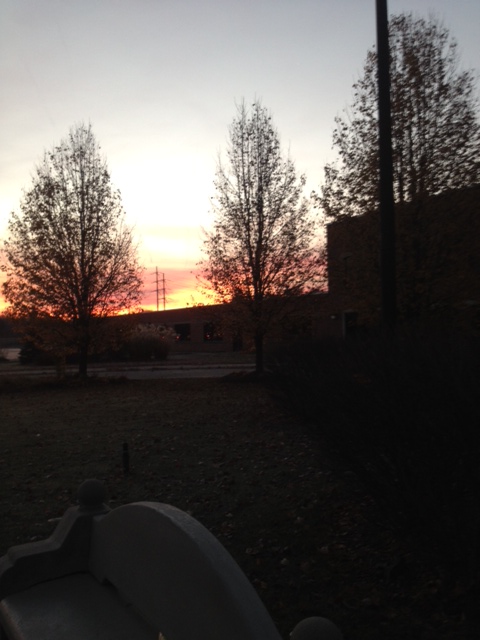
Our county is electing not to plow the sidewalks in a timely manner, making it difficult for people (including shoppers from a supermarket across the street) to get to the bus stop. I use that bus to get to work and a night worker from a nearby convenience store sometimes joins me when he goes off shift.
My balance isn't what it used to be, and I have a bad back. And, I have to get to work.
So, I've been contacting local officials. And contacting them. And will continue to contact them One, Tom Augostini, a Town of Union councilman, has been responsive and gave me his cell phone number. I even got a phone call from the Town of Union Supervisor, Rose Sotak. Kudos to them. Mr. Augostini and I had a phone conversation yesterday and I hope it was productive.
But who hasn't been responsive? County officials. I tried contacting the County Supervisor, Debra Preston, without success.
I hope the Town can help me and the other elderly/disabled/young/working poor and others who use that bus stop. It was bad enough part of Westover was destroyed by the flood. Houses still stand vacant, and will eventually be torn down. The former BAE building will stand vacant and ruined, though, perhaps for years.
Uncaring government isn't going to destroy our spirit.
Have you fought "City Hall"? Have you advocated for the people in your community who need help?
Subscribe to:
Posts (Atom)