Out of a shameful part of our United States history came a wonderful story of two Boy Scouts that, in their small ways, changed history.
You can see and hear it here.
We just commemorated the 77th anniversary of the bombing of Pearl Harbor by Japanese armed forces, which resulted in the entry of our country into World War II.
But what also happened is that thousands of United States citizens of Japanese descent were rounded up and sent to interment camps all over the country. One of these was a hastily constructed camp at Heart Mountain, near Cody, Wyoming.
One of the detainees was a young man by the name of Norman Mineta. He had been, back in California before he became a civilian prisoner of war, a Cub Scout. His parents had wanted to become United States citizens before the war, but had been prevented from doing so.
The young of this camp were sent to school within the camp and permitted various activities to keep them occupied. One of these was the formation of a Boy Scout troop and Norman Mineta joined. The troop tried to engage nearby Wyoming troops in their activities, but all the troops rejected their overtures. These boys were the enemy, after all.
Or were they?
Only one troop accepted the overtures of the Japanese interment camp's troop, and came to visit In that troop was a young Boy Scout by the name of Alan Simpson.
Alan Simpson and Norman Mineta became good friends. And the 12 year old Simpson, who returned to a warm home after his visit to the internment camp, realized an injustice was being done.
The two boys didn't see each other again for some 35 years.
When they met again, it was thousands of miles away, in Congress, where Senator Alan Simpson (Republican) made his second acquaintance with Congressman Norman Mineta (Democrat). Eventually, Mineta would join the Cabinets of two Presidents. Their friendship has lasted to this day.
Simpson, now 87, gave one of the eulogies at the recent funeral of former President George H.W. Bush, under whom Mineta served as Secretary of Transportation.
An interesting story of non fiction.
As it is said, you can't make this stuff up.
Sunday, December 9, 2018


Saturday, December 8, 2018
Sustainable Saturday - Apple Syrup from Peelings and Cores
I'm embarrassed (well, just a little). I promised you this recipe in my recent post for Lazy Applesauce. Here's the background story:
Last month, my sister in law traveled from her home to say goodbye to her dying mother. While she stayed with us, she helped me make an apple crisp. There were peels and cores left over from her efforts, and I decided not (for once) to throw them away or compost them.
Recently, my spouse had gotten a book out of the library called "Cooking with Scraps: Turn Your Peels, Cores, Rinds, and Stems into Delicious Meals". The author is Lindsay-Jean Hard. This is very much a modern cookbook, yet celebrates the old time virtues of "waste not, want not."
My sister in law is a firm believer in this concept, and decided, after helping with the crisp, that she wanted to do something with the peels and cores. She had browsed the book and had an idea.
So here's the problem - I can't remember exactly what she did - because, true confession time, I had a stomach bug. So all I can do is "sort of" tell you what she did. (I could have asked her, yes, but that would have been too easy.)
 My sister in law took the peels and scraps of five large apples, and cooked them with some sugar. (Spouse thinks it was about a cup - it was less than what the recipe called for.)
 They were strained out. The syrup was then cooked some more to reduce.

The finished (and delicious) syrup. Cinnamon and/or cloves would be a nice additional touch.
I went ahead and found this recipe online - I hope it produces a similar result.
Incidentally, I browsed the "Cooking with Scraps" book and I highly recommend it to anyone who loves to cook and loves the concept of reducing food waste.
Last month, my sister in law traveled from her home to say goodbye to her dying mother. While she stayed with us, she helped me make an apple crisp. There were peels and cores left over from her efforts, and I decided not (for once) to throw them away or compost them.
Recently, my spouse had gotten a book out of the library called "Cooking with Scraps: Turn Your Peels, Cores, Rinds, and Stems into Delicious Meals". The author is Lindsay-Jean Hard. This is very much a modern cookbook, yet celebrates the old time virtues of "waste not, want not."
My sister in law is a firm believer in this concept, and decided, after helping with the crisp, that she wanted to do something with the peels and cores. She had browsed the book and had an idea.
So here's the problem - I can't remember exactly what she did - because, true confession time, I had a stomach bug. So all I can do is "sort of" tell you what she did. (I could have asked her, yes, but that would have been too easy.)


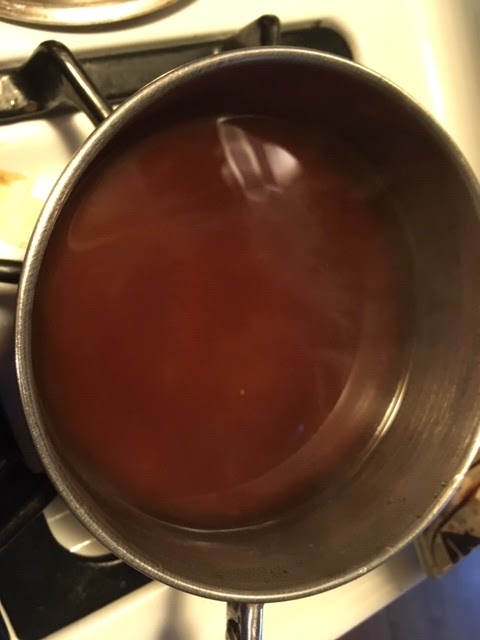
The finished (and delicious) syrup. Cinnamon and/or cloves would be a nice additional touch.
I went ahead and found this recipe online - I hope it produces a similar result.
Incidentally, I browsed the "Cooking with Scraps" book and I highly recommend it to anyone who loves to cook and loves the concept of reducing food waste.
Friday, December 7, 2018
Upstate Sunset #SkywatchFriday
Joining Yogi and the other bloggers who watch the sky each Friday on #SkywatchFriday. Have a picture of the sky? Come join us.
December sunrises and sunsets, so many times, are hidden by clouds where I live in upstate New York.

But, on December 2, the clouds cleared up enough to see the sky shortly after sunset.

The sky glowed blue and pink.

"Look at me!" the sky seemed to say.
 A last look before the clouds returned.
December sunrises and sunsets, so many times, are hidden by clouds where I live in upstate New York.

But, on December 2, the clouds cleared up enough to see the sky shortly after sunset.

The sky glowed blue and pink.

"Look at me!" the sky seemed to say.

Thursday, December 6, 2018
The Mansion that Swamp Root Built
I've blogged about the Hanukkah House museum in Binghamton, New York each Hanukkah season, but I've never shown you the building it is located in.

This is the Kilmer Mansion which is now owned by Temple Concord in Binghamton, not that far from where Rod Serling of Twilight Zone fame grew up. It was built in 1878 by a family who manufactured a patent medicine called Swamp Root and were hated and feared. For those interested in architecture, though, it is a gem.
 The front has a chanukkiyah which stands all year.
 Some detail of the floor inside.
 An overview of one of the rooms.
 And a tribute to the past.
There are several Kilmer properties in Binghamton, but this one has special meaning. If you are ever in our area in December, do visit. Admission is free to the Hanukkah House museum, although a donation to our local food pantry would be most welcome.

This is the Kilmer Mansion which is now owned by Temple Concord in Binghamton, not that far from where Rod Serling of Twilight Zone fame grew up. It was built in 1878 by a family who manufactured a patent medicine called Swamp Root and were hated and feared. For those interested in architecture, though, it is a gem.


There are several Kilmer properties in Binghamton, but this one has special meaning. If you are ever in our area in December, do visit. Admission is free to the Hanukkah House museum, although a donation to our local food pantry would be most welcome.
Wednesday, December 5, 2018
Dollhouses - #WordlessWednesday
Every year I pay tribute to Roberta King, who was murdered in a mass shooting at the American Civic Association in Binghamton, New York on April 3, 2009. She was a collector of dolls and dollhouses that represented Jewish life, and her family generously allows the Hanukkah House museum (open for a month each year in Binghamton, New York) to display some of her dollhouses and dolls.
 When someone passes on, what remains are the memories.
 A room.

 This museum is in what used to be a mansion belonging to a patent medicine maker who became quite wealthy.

Memories of the past.

Join Esha and Natasha each Wednesday for #WordlessWednesday.


Memories of the past.

Join Esha and Natasha each Wednesday for #WordlessWednesday.
Tuesday, December 4, 2018
Lazy Applesauce
Apples will get me into the kitchen, a place which rarely feels my footsteps.
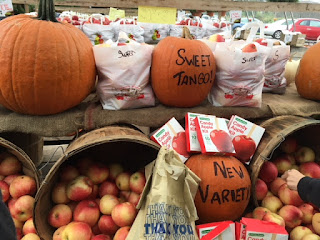
On a cool fall day, what better thing is there than to make applesauce? Especially when Hanukkah is drawing near. And now that it is here, you need applesauce more than ever, right?
Since I am a lazy cook, here is a recipe for lazy applesauce.
You need several pounds of cooking apples. But they don't have to be cooking apples. I've used Gala and even Honeycrisp.
Be aware, some apples will produce a grainy applesauce. Macouns and MacIntosh will make a nice, smooth sauce. I like mine a little chunky. Cortlands and Pippins, if you can get them, will make a chunkier sauce. The harder the apple flesh, the grainier. Tartness is a personal preference.

So: take your favorite apples. Wash them.
Core the apples. Cut into pieces, perhaps 8 pieces per apple. Peeling is optional. Put the apples in a pot. Add about 3/4 of a cup of water, or, if you have it, apple juice or apple cider. If you want sugar, use brown sugar.
Cook the apples under medium low heat until they are ready to be mashed with an apple masher, perhaps 25 minutes. Add cinnamon or cloves to taste. Let the aroma float through your house. Savor the aroma. It's time for comfort food. Puree it if you like. I don't. I'm lazy.
Some people add butter. I do not.
One thing I've done in recent years is add raspberries to the sauce. We weren't able to pick raspberries last year, but had the chance to pick raspberries last year and still had some in the freezer.
If you do, just be sure to strain all those small seeds out.
My Mom used to make applesauce with cinnamon candies, which dyed the sauce red. It's a wonderful memory for me. In turn, I made applesauce with my young son, years ago. He's graduated to peppery hot sauce now. He even grows his own jalapeños for it.
Serve your applesauce, fragrant with the scents of autumn, warm. Or cold. Serve with potato pancakes (as spouse did on the first day of applesauce). Or, just eat it as is.
One final thought - remember those cores and peels (if you peeled your apples?) You don't want to throw them out. On Saturday, I plan to give you a recipe that will use them.
Do you like applesauce? How do you make it?

On a cool fall day, what better thing is there than to make applesauce? Especially when Hanukkah is drawing near. And now that it is here, you need applesauce more than ever, right?
Since I am a lazy cook, here is a recipe for lazy applesauce.
You need several pounds of cooking apples. But they don't have to be cooking apples. I've used Gala and even Honeycrisp.
Be aware, some apples will produce a grainy applesauce. Macouns and MacIntosh will make a nice, smooth sauce. I like mine a little chunky. Cortlands and Pippins, if you can get them, will make a chunkier sauce. The harder the apple flesh, the grainier. Tartness is a personal preference.

So: take your favorite apples. Wash them.
Core the apples. Cut into pieces, perhaps 8 pieces per apple. Peeling is optional. Put the apples in a pot. Add about 3/4 of a cup of water, or, if you have it, apple juice or apple cider. If you want sugar, use brown sugar.
Cook the apples under medium low heat until they are ready to be mashed with an apple masher, perhaps 25 minutes. Add cinnamon or cloves to taste. Let the aroma float through your house. Savor the aroma. It's time for comfort food. Puree it if you like. I don't. I'm lazy.
Some people add butter. I do not.
One thing I've done in recent years is add raspberries to the sauce. We weren't able to pick raspberries last year, but had the chance to pick raspberries last year and still had some in the freezer.
If you do, just be sure to strain all those small seeds out.
My Mom used to make applesauce with cinnamon candies, which dyed the sauce red. It's a wonderful memory for me. In turn, I made applesauce with my young son, years ago. He's graduated to peppery hot sauce now. He even grows his own jalapeños for it.
Serve your applesauce, fragrant with the scents of autumn, warm. Or cold. Serve with potato pancakes (as spouse did on the first day of applesauce). Or, just eat it as is.
One final thought - remember those cores and peels (if you peeled your apples?) You don't want to throw them out. On Saturday, I plan to give you a recipe that will use them.
Do you like applesauce? How do you make it?
Monday, December 3, 2018
MusicMoves Me - Hearing the Bells and More
Welcome! It's Monday and time for another episode of Music Moves Me!
Who are the #MusicMovesMe bloggers? We are bloggers (and perhaps also musical elves) who blog about music each Monday and if you have music to share with us, you are most welcome to join! (Music Posts Only on this music train, please!) First, there is XmasDolly, Her co-conductors are: ♥Callie of JAmerican Spice♥, and ♥Stacy of Stacy Uncorked♥ Also, co-conducting is ♥Cathy from Curious as a Cathy♥ . And finally, there's me.
Every other week we have a theme, and on alternate weeks, we can blog about any music we wish. But December is different.
Normally, in the month of December, the Music Moves Me participants concentrate on Christmas music. But today, I am going to take a different track. (Track...get it?...I guess anyone who remembers 8 track tapes does.)
Actually, three tracks. Because today is the first full day of Hanukkah, the Festival of Lights of my people.
My first song is a parody of Queen's Bohemian Rhapsody. The a capella group Six13 and their new release "Bohemian Chanukah" helped to brighten this season for me. The history is a little "off", but that can be forgiven - after all, it's a parody song, not a history textbook.
My second choice is a song by Peter, Paul and Mary called Light One Candle. This performance is from 1986, and I feel this song transcends Hanukkah and has meaning for us all.
Switching this holiday music to its second track, I am inspired today by a Civil War era Longfellow poem that was made into a Christmas music classic. Bing Crosby with "I Heard the Bells on Christmas Day".
This song has a painful but inspirational history behind it.
The poem the song is based on is "Christmas Bells", written by Henry Wadsworth Longfellow. His son Charles had been seriously wounded in a Civil War skirmish in late November of 1863. This poem is the anguished result.
Loss was no stranger to Longfellow but his son did survive his war injuries.
The last two verses, especially, speak to our country today:
And in despair I bowed my head; “There is no peace on earth," I said; “For hate is strong, And mocks the song Of peace on earth, good-will to men!”
The rest of this post is on my third track, which features some music that can help us recover from loss, because this holiday season can be so hard on those of us who have experienced recent loss.Then pealed the bells more loud and deep: “God is not dead, nor doth He sleep; The Wrong shall fail, The Right prevail, With peace on earth, good-will to men.”
Let It Be - The Beatles, a classic song from the Beatles.
After 9/11, the Scorpions song Wind of Change somehow called to me, and I listened to it over and over.
Next week, an annual music tradition on my blog.
May all of my readers have a happy holiday season, and to my Jewish readers, a Happy Hanukkah.
Sunday, December 2, 2018
Hanukkah
Tonight is the first night of Hanukkah.
While most of us in the United States are preparing for Christmas, the Jewish people of this country celebrate Hanukkah.
In Binghamton, there is a wonderful museum in a historic mansion that opens for a month every year, this year from November 27 to December 27. Run by volunteers, Hanukkah House is free (but donations to a local food pantry are accepted).
I have blogged about Hanukkah House before:
Hanukkah House Binghamton
The Dolls of Memory
And, about Hanukkah
A Hanukkah potpourri
Latkes


But this year, with the tragic synagogue shooting in Pittsburgh and the continued rise of anti-Semitism in this country (right now New York State leads the nation), many Jews find themselves living in fear.

Can you imagine having to light candles in secret, or hide menorahs away from the public. But that has been necessary at various points in time.
It is a wonderful thing when communities band together to fight anti-Semitism, as at least two communities in Montana have done in past years.
But, for Jews, these remain scary times.
If you know of an anti-Semitic incident, feel free to report it here.
We can not stay silent, during this festival that tells the story of a struggle for religious freedom.
Saturday, December 1, 2018
Throwback Saturday- Journey to the Maquasen and Sinnekens
A post from 2010, when I was recovering from a sprained ankle and doing a bit of reading:
Until finding a certain book called "Journey into Mohawk Country" by Messrs. Van den Bogaert and O'Connor, I never knew that a certain Harmen Mayndertsz van den Bogaert had written a diary of his journey from New Amsterdam [New York City] to Ft.Orange [Albany] accompanied by two Dutch and five Maquasen Indians [Mohawk] taking approximately five weeks, during December of 1634 and January of 1635.
His mission? To find out why the Mohawk were abandoning their beaver fur trade with the Dutch in favor of trading with the French.
Until I had traveled in September, 2010 to Stillwater and Ft. Ticonderoga (and Lake George Village), New York, I had not paid much attention to the history preceding the French and Indian War. Now, I seem to be running into it everywhere.
The YA version of this book was actually a graphic novel. But like the old Classics Illustrated comics, this graphic novel may lead readers to the original book. For me, it was a good read while I was nursing my sprained ankle.
This was raw travel. Van den Bogaert and his traveling companions would not have made it to Ft. Orange had it not been for the hospitality of the Maquasen and Sinnekens [a general word for Native Americans west of the Mohawk, but used here to describe the Oneida]. They traded tools and weapons for the Native hospitality. They slept in longhouses, tried a couple of times to heal sick Native Americans at their hosts' request, and unsuccessfully tried to purchase a "tame" bear as a traveling companion. They feasted on bear, dried salmon, and hare cooked with chestnuts.
That's true adventure of a type that is hard to come by in the East today. Thinking that Van den Bogaert wasn't much older than my son was in 2010 when Van den Bogaert made this journey, I conclude that this type of adventure is denied our young people. I sometimes wonder if my son would have leapt at the chance to make this journey. I suspect he would have.
Will I try to tackle the source document? Not sure [and, as of 2018, I haven't]. But I loved the graphic novel.
Thank you, George O'Connor, and the other people involved in adapting this journal to the graphic novel format.
Friday, November 30, 2018
Thanksgiving - #SkywatchFriday
Today, a look back at the skies of Thanksgiving and the day after.

I've fallen in love with this view from the parking lot of the skilled nursing facility my mother in law lived in before her death. Thanksgiving was cold but, due to that, the sky was nice and blue.
 Sundown Thursday.
 Black Friday dawned (that "zero" is -17.8 Celsius, by the way).

And, as the sun rose, the moon (the white blob to the left of the streetlight) set.

Seconds later, it had almost totally disappeared.

And, by the Sunday after Thanksgiving, it had warmed up and the clouds were back.
Join Yogi and the other bloggers who watch the sky each Friday on #SkywatchFriday.

I've fallen in love with this view from the parking lot of the skilled nursing facility my mother in law lived in before her death. Thanksgiving was cold but, due to that, the sky was nice and blue.


And, as the sun rose, the moon (the white blob to the left of the streetlight) set.

Seconds later, it had almost totally disappeared.

And, by the Sunday after Thanksgiving, it had warmed up and the clouds were back.
Join Yogi and the other bloggers who watch the sky each Friday on #SkywatchFriday.
Thursday, November 29, 2018
The Reblooming Kalanchoe
For the next few days, I will be rerunning some favorite posts from my blog.
In a Reblooming Kalanchoe Is There Hope?
"What is the single best piece of advice you've ever received about the publishing process and/or what advice would you offer to a first-time author?"That single piece of advice I learned from this challenge was "never give up hope."
Hope of what? Hope of achieving your goals. Sometimes, just not giving up hope of survival. I knew, before the Challenge, that becoming a published author was hard. Now I have a better idea of just how hard and grueling it can be. In the midst of the struggle, a beginning author must believe in him or herself, and never give up hope that it will get better, that the goals will be achieved, that the hard work will pay off.
And then there is the story of the kalanchoe.
I had a neighbor who is seriously ill with cancer. Sometimes, he sits outside in the sunshine, enjoying the small garden he and his wife have planted next to their rental house.
Some months ago, before he was diagnosed with this illness, he was in the hospital for another reason. Someone gave him a kalanchoe as a get-well gift. A kalanchoe, for the uninitiated, is a succulent plant with small blooms, which come in a variety of colors. They can be quite pretty.
Ah, those hospital gift plants. You get them from people who know that flowers may not be the ideal gift. Flowers die after a few days, and if your recipient is allergic, those flowers are the gift that brings misery. Now, a flowering plant, that's slightly different. There's a hope of keeping the plant alive after it finishes blooming. A foliage plant? Even better.
My neighbor, after a period of enjoying the kalanchoe, offered it to me. I hesitated for a minute before accepting the plant. I take flowering plants seriously. I have two poinsettias in my upstate NY yard right now, along with two amaryllis. Any flowering plant I receive will get the best care I know how to give. I can't bear to have one die on me, although I have blogged about my less than stellar track record with orchids.
I hesitated because a few years ago, I got a kalanchoe as a gift. I kept it alive on my windowsill for a couple of years. It never rebloomed and eventually it succumbed to white flies.
I kept my neighbor's gift alive all winter on my living room table. Come late spring, it went outside, where I figured it would have a better chance of escaping white flies.
One night, I went out to water my back yard potted plants, and this sight awaited me.


My neighbor's kalanchoe was starting to rebloom.
Wednesday, November 28, 2018
Throwback Wednesday - The Kindness of Others
What follows is a post from 2011. My mother in law was 83 years old when this event happened. And today, we will spend time with my mother in law's family, including some of these same people, mourning her passing but also celebrating her life.
Now that my mother in law is no longer with us a lot of memories have come up. This is a good one.
As background to this story, my mother in law had a dizzy spell in her house and fell. She sprained her ankle and bruised herself up badly. The recovery was going to take a while. Back then, we lived 150 miles from her.
What happened next? Panic time. Mom was going to have limited mobility and a long recovery time. We'd have to cook for her, help clean for her, take care of shopping and transportation needs - from 150 miles away.
But then, to the rescue...and here is the post from 2011:
There were several sets of guardian angels in my mother in law's life, and yesterday we all converged on my mother in law's house for a BBQ we had promised as a thank you.
Two sets of nieces and nephews, and a single niece, sprung into action to help my mother in law out. These weren't local people either. They lived closer than we do, but they still had to drive a bit. One of the duos sometimes came out more than once a week. They all had experience with caregiving for their elderly parents (in all cases, since deceased). They did many things, too many things to mention, to help her recovery and make her everyday life easier. I learned a lot from the experience. I know we are going to have many more adventures in our care giving journey. I know this is only the beginning.
All of these relatives, and you know who you are, thank you. You will always have a special place in my heart.
One of the nieces, during this whole process, gave me almost nightly updates on Facebook. We kept in touch with my mother in law, of course, and visited when we could, and other siblings helped out also. But we both work, and anyone who has done long distance caregiving knows how difficult it can be. I know it is only going to get worse. We've been lucky so far.
In our case, the fact that my mother in law lives with her developmentally disabled son just added to the complications. That's worth a blog post all by itself.
Thankfully, my mother in law is a lot better now. But time marches on and she is very frustrated at what the aging process has done to her.
Today, the weather cooperated. My spouse (the family cook) grilled hamburgers, white hots (a type of bockwurst popular in our part of upstate NY), pork tenderloin spiedies (spiedies are another specialty food of our area), and grilled vegetables. Everyone else brought a covered dish or a dessert. Two people brought their I-Pads and owning one is very tantalizing. One of the men brought a remote control helicopter, called a Parrot, which is controlled through an I-Pad. If I'm up to it, I'll post some pictures of the adventures of the Parrot later this week.
One of the couples brought their daughter. What a smart, well poised cousin my husband has. This is a young woman who is going to go places. She pitched right in and did more than her share of the cleanup.
After dinner, my mother in law brought her wedding photo album out for some family memories.
There was a lot of sadness in watching my mother in law age. She's always been a hard worker, and it is so hard for her to sit down and let other people do the work. She kept herself in shape when younger, but time takes its toll on everyone. A stroke several years ago didn't help her, either.
And now, in 2018, she's gone, and today, we pay tribute to her.
Now that my mother in law is no longer with us a lot of memories have come up. This is a good one.
As background to this story, my mother in law had a dizzy spell in her house and fell. She sprained her ankle and bruised herself up badly. The recovery was going to take a while. Back then, we lived 150 miles from her.
What happened next? Panic time. Mom was going to have limited mobility and a long recovery time. We'd have to cook for her, help clean for her, take care of shopping and transportation needs - from 150 miles away.
But then, to the rescue...and here is the post from 2011:
There were several sets of guardian angels in my mother in law's life, and yesterday we all converged on my mother in law's house for a BBQ we had promised as a thank you.
Two sets of nieces and nephews, and a single niece, sprung into action to help my mother in law out. These weren't local people either. They lived closer than we do, but they still had to drive a bit. One of the duos sometimes came out more than once a week. They all had experience with caregiving for their elderly parents (in all cases, since deceased). They did many things, too many things to mention, to help her recovery and make her everyday life easier. I learned a lot from the experience. I know we are going to have many more adventures in our care giving journey. I know this is only the beginning.
All of these relatives, and you know who you are, thank you. You will always have a special place in my heart.
One of the nieces, during this whole process, gave me almost nightly updates on Facebook. We kept in touch with my mother in law, of course, and visited when we could, and other siblings helped out also. But we both work, and anyone who has done long distance caregiving knows how difficult it can be. I know it is only going to get worse. We've been lucky so far.
In our case, the fact that my mother in law lives with her developmentally disabled son just added to the complications. That's worth a blog post all by itself.
Thankfully, my mother in law is a lot better now. But time marches on and she is very frustrated at what the aging process has done to her.
Today, the weather cooperated. My spouse (the family cook) grilled hamburgers, white hots (a type of bockwurst popular in our part of upstate NY), pork tenderloin spiedies (spiedies are another specialty food of our area), and grilled vegetables. Everyone else brought a covered dish or a dessert. Two people brought their I-Pads and owning one is very tantalizing. One of the men brought a remote control helicopter, called a Parrot, which is controlled through an I-Pad. If I'm up to it, I'll post some pictures of the adventures of the Parrot later this week.
One of the couples brought their daughter. What a smart, well poised cousin my husband has. This is a young woman who is going to go places. She pitched right in and did more than her share of the cleanup.
After dinner, my mother in law brought her wedding photo album out for some family memories.
There was a lot of sadness in watching my mother in law age. She's always been a hard worker, and it is so hard for her to sit down and let other people do the work. She kept herself in shape when younger, but time takes its toll on everyone. A stroke several years ago didn't help her, either.
And now, in 2018, she's gone, and today, we pay tribute to her.
Tuesday, November 27, 2018
Polio and the President
Polio.
I visited Warm Springs, Georgia in March of 2010 and saw the Little White House where Roosevelt died, the unfinished portrait that still sits in the house, and the pools where Roosevelt had found relief from his polio.
Yes, Roosevelt was a disabled man in a time were disabled people were disrespected and discriminated against - so much so that Roosevelt had to hide the fact that he depended on a wheelchair for mobility.
Otherwise, people might have thought he was unfit for office.
That would be totally inconceivable today - but those were very different times. Still, Franklin Roosevelt, who contracted polio at the age of 39, had a large role in making disability acceptable, and gave hope to a lot of people with polio. Ever hear of the March of Dimes? It started as a movement to find a cure for polio
At the time of his death, polio was a feared scourge. I can vaguely remember the panic that was felt during the summer - the peak time for polio. Parents would even keep their children away from public swimming pools, as it was believed that pools were one place you could "catch" polio. As children, we believed that being near a storm drain could give you polio.
Some children became so paralyzed that they could no longer breathe on their own. My generation remembers a device called an iron lung.
But then everything changed.
A charity called The March of Dimes was founded by Franklin Roosevelt in 1938.. Roosevelt had a simple idea- asking Americans to send in a dime, just one dime, to fight polio. The "march" of dimes helped to finance research, so that the Salk and Sabin vaccines could be developed. In honor of Roosevelt's fund raising, his face appears on the dime and has appeared for many years.
Ironically, Roosevelt's polio may have been misdiagnosed - but many people alive today can be grateful for that misdiagnosis.
I may have been one of those young children in those old black and white photos lining up in schools for their polio shot. I even vaguely remember being in one of those lineups.
I was a member of the first generation in human history that did not have to fear polio. And to my son, polio is just a historical curiosity - although one of his older cousins married a woman who had polio as a child, and has a noticeable limp to show for it.
And yes, there is still a Roosevelt Institute for Rehabilitation in Warm Springs.
If you need a story on how one person can change history, and enrich the lives of millions, you need look no further than this story.
And we all hope a cure is found for AFM soon before more children are stricken.
Monday, November 26, 2018
Music Monday - Blue Christmas
Normally, on Mondays, I join a blog hop called "Music Monday". This
Monday, I am not going to join in because I won't be in a position to
visit my fellow music lovers.
However, I believe 100% in the healing powers of music, so I hope you will join me for a few moments of music that may help through hard times.
I guess by now I should be an expert on this kind of thing. Twenty years ago, my father in law passed away the day after Christmas. This year, my mother in law passed away the day after Thanksgiving.
I know that some (maybe many) of my readers have suffered loss during the holiday season. It doesn't have to be death - there are so many kinds of losses and disappointments out there. None of us pass through this world unscathed. And it is hard, for those of us who have suffered loss, to go through a season where you are supposed to be merry and bright, but you see the world through sad-tinted eyes.
In the song Blue Christmas, Elvis sings about a Christmas without the one he loves. I chose a live version with Martina McBride for this version.
I'll be back to Music Moves Me next Monday, hopefully.
However, I believe 100% in the healing powers of music, so I hope you will join me for a few moments of music that may help through hard times.
I guess by now I should be an expert on this kind of thing. Twenty years ago, my father in law passed away the day after Christmas. This year, my mother in law passed away the day after Thanksgiving.
I know that some (maybe many) of my readers have suffered loss during the holiday season. It doesn't have to be death - there are so many kinds of losses and disappointments out there. None of us pass through this world unscathed. And it is hard, for those of us who have suffered loss, to go through a season where you are supposed to be merry and bright, but you see the world through sad-tinted eyes.
In the song Blue Christmas, Elvis sings about a Christmas without the one he loves. I chose a live version with Martina McBride for this version.
I'll be back to Music Moves Me next Monday, hopefully.
Sunday, November 25, 2018
Washington Roebling and His Lessor Known Bridge
I published this post several years ago, and thought it would be an interesting throwback post for my readers.
What do Brooklyn, Brunswick, Maine, Cincinnati, Ohio, Gettysburg, Pennsylvania and our United States Civil War have in common?
The answer is, the Roebling family, a family responsible for some of the most historic bridges in this country. One of their members, a civil engineer by the name of Washington Roebling, served in the United States Civil War.
 Chances
are, you may well have traveled over at least one bridge designed by
the firm of John A. Roebling's Sons. These bridges
include the Brooklyn Bridge )photo below), the John A. Roebling Suspension Bridge
(connecting Cincinnati, OH and Covington, KY) and the bridge above, the Brunswick Topsham Swinging Bridge over the Androscroggin River in Maine (photo above).
Chances
are, you may well have traveled over at least one bridge designed by
the firm of John A. Roebling's Sons. These bridges
include the Brooklyn Bridge )photo below), the John A. Roebling Suspension Bridge
(connecting Cincinnati, OH and Covington, KY) and the bridge above, the Brunswick Topsham Swinging Bridge over the Androscroggin River in Maine (photo above).
I have walked across both the Brooklyn Bridge and the Brunswick Topsham Swinging Bridge. You couldn't ask for two totally different experiences. The Brooklyn Bridge is traveled by thousands of people daily - by car, by foot, and by bicycle. The scenery is breathtakingly urban, dominated by skyscrapers on both sides of the East River. At the time the bridge was built, Brooklyn was a city separate from New York City. (In some ways it still is-for example, still having its own library system.)
The bridge between Brunswick, Maine (a college town rich in history) and Topsham is a pedestrian only bridge. Brunswick has many connections to the Civil War, among them the fact that the book Uncle Tom's Cabin was written there and that General Joshua Chamberlain of Gettysburg fame (later the governor of Maine) also lived there for a time.
Washington Roebling served in various capacities as an engineer in the Civil War, including at the Battle of Gettysburg. Stricken by the bends due to an accident during the building of the Brooklyn Bridge, he spent the last 40 plus years of his life as a physical invalid with a very active mind. Despite his disability, he outlived many people in his family and even ran the family business for a time when in his 80's.
If you've seen the Smithsonian rock and mineral collection at the Museum of Natural History in Washington, DC, you can thank Washington Roebling for the beginnings of that collection.
When you think of engineers and the bridges that link our lives....think of the Roeblings.
The answer is, the Roebling family, a family responsible for some of the most historic bridges in this country. One of their members, a civil engineer by the name of Washington Roebling, served in the United States Civil War.

 |
| Brooklyn Bridge, September 2015, taken from the Brooklyn-Queens Expressway |
I have walked across both the Brooklyn Bridge and the Brunswick Topsham Swinging Bridge. You couldn't ask for two totally different experiences. The Brooklyn Bridge is traveled by thousands of people daily - by car, by foot, and by bicycle. The scenery is breathtakingly urban, dominated by skyscrapers on both sides of the East River. At the time the bridge was built, Brooklyn was a city separate from New York City. (In some ways it still is-for example, still having its own library system.)
The bridge between Brunswick, Maine (a college town rich in history) and Topsham is a pedestrian only bridge. Brunswick has many connections to the Civil War, among them the fact that the book Uncle Tom's Cabin was written there and that General Joshua Chamberlain of Gettysburg fame (later the governor of Maine) also lived there for a time.
Washington Roebling served in various capacities as an engineer in the Civil War, including at the Battle of Gettysburg. Stricken by the bends due to an accident during the building of the Brooklyn Bridge, he spent the last 40 plus years of his life as a physical invalid with a very active mind. Despite his disability, he outlived many people in his family and even ran the family business for a time when in his 80's.
If you've seen the Smithsonian rock and mineral collection at the Museum of Natural History in Washington, DC, you can thank Washington Roebling for the beginnings of that collection.
When you think of engineers and the bridges that link our lives....think of the Roeblings.
Saturday, November 24, 2018
Mother
I have a story for today and I don't quite know what to make of it.
My 90 year old mother in law, whom I've blogged about from time to time in the almost ten year history of this blog, passed away yesterday.
Before we got the call, we had decided to treat ourselves to a "Black Friday" breakfast out, something we used to do a lot but stopped doing except for special occasions.
This is where we decided to go yesterday.

The "Greek House" (which serves a lot more than Greek food) has been owned by an Egyptian everyone calls Sam for the past 25 years. It has been through two floods, the second of which closed it for a couple of months. Meantime, a large manufacturer across the street's building was ruined by that flood and had to move four miles or so down the road. But the Greek House survived.
One day recently, a sign appeared in their window.
It's hard to see above, but it reads "Thank You to our loyal customers who have kept us in business for 25 years, and thanks to our loyal staff. We couldn't have made it without you. Sam."

Now, when we have eaten here, the plates the food was served on were normal restaurant plates.
Not yesterday morning around 7:15 AM. In fact, the normally fast service wasn't there. We waited and waited.
When our food was served, each of our plates was decorated on the rim, in big bold script, with the word MOTHER.
In faint lettering, there were various traits of the ideal mother listed. Loving. Patient. Kind. Compassionate. And so forth.
MOTHER....
It was so strange that I almost took a picture of the plate and my food, but decided not to. Now I wish I had. Maybe you don't believe me but this is 100% true.
We finished our breakfast and went home.
And, not five minutes after entering our house, we got the phone call from the nursing home.
I'm still wondering:
How did Sam know?
My 90 year old mother in law, whom I've blogged about from time to time in the almost ten year history of this blog, passed away yesterday.
Before we got the call, we had decided to treat ourselves to a "Black Friday" breakfast out, something we used to do a lot but stopped doing except for special occasions.
This is where we decided to go yesterday.

The "Greek House" (which serves a lot more than Greek food) has been owned by an Egyptian everyone calls Sam for the past 25 years. It has been through two floods, the second of which closed it for a couple of months. Meantime, a large manufacturer across the street's building was ruined by that flood and had to move four miles or so down the road. But the Greek House survived.
One day recently, a sign appeared in their window.
It's hard to see above, but it reads "Thank You to our loyal customers who have kept us in business for 25 years, and thanks to our loyal staff. We couldn't have made it without you. Sam."

Now, when we have eaten here, the plates the food was served on were normal restaurant plates.
Not yesterday morning around 7:15 AM. In fact, the normally fast service wasn't there. We waited and waited.
When our food was served, each of our plates was decorated on the rim, in big bold script, with the word MOTHER.
In faint lettering, there were various traits of the ideal mother listed. Loving. Patient. Kind. Compassionate. And so forth.
MOTHER....
It was so strange that I almost took a picture of the plate and my food, but decided not to. Now I wish I had. Maybe you don't believe me but this is 100% true.
We finished our breakfast and went home.
And, not five minutes after entering our house, we got the phone call from the nursing home.
I'm still wondering:
How did Sam know?
Friday, November 23, 2018
Winter Comes #SkywatchFriday
Today is Black Friday in the United States. I should be out shopping but it's a bit cold outside.
But I turn my eyes to the sky and join Yogi and other bloggers in #SkywatchFriday.
 Today, I contrast two days. The day before our first snowstorm, downtown Binghamton, New York seems so tranquil back on November 14.

On November 15th, with the snowfall less than an hour away, the sky turns white. Remember my birds on the wires from last week? They are still at it, visible as tiny specs in the middle of the picture, ready to alight on the utility wires.

November 16, as my spouse drives me to work. (Thank you, spouse!)
 Deceptively blue sky.

What downtown Binghamton looked like on the morning of November 15.
Winter has come.
But I turn my eyes to the sky and join Yogi and other bloggers in #SkywatchFriday.


On November 15th, with the snowfall less than an hour away, the sky turns white. Remember my birds on the wires from last week? They are still at it, visible as tiny specs in the middle of the picture, ready to alight on the utility wires.

November 16, as my spouse drives me to work. (Thank you, spouse!)


What downtown Binghamton looked like on the morning of November 15.
Winter has come.
Thursday, November 22, 2018
Fall Meets Winter #ThursdayTreeLove
In this photo taken 11-14-18, fall meets winter in downtown Binghamton, New York.
The day before the first snowstorm of the season hit, snow flurries whitened some of the ground, but fall foliage was still visible.
Now, the leaves are gone and the ground is covered in the white stuff.
Nothing is forever, our four season climate teaches us. Today is going to be the coldest Thanksgiving (the fourth Thursday in November, in the United States) in 100 years.
As part of our Thanksgiving, it is traditional to eat a bird called the turkey. These turkeys are common wild birds where we live, although they aren't quite as good eating as domestic ones.
But it can be a thrill to see one. This picture was taken by my guest photographer several years ago in the Northeastern United States. Majestic, aren't they?
To all my readers in the United States, may you have a happy Thanksgiving.
Join Parul at Happiness and Food and other bloggers the second and fourth Thursdays of the month at #ThursdayTreeLove.
 |
| Broome County Courthouse, Binghamton, New York |
Now, the leaves are gone and the ground is covered in the white stuff.
Nothing is forever, our four season climate teaches us. Today is going to be the coldest Thanksgiving (the fourth Thursday in November, in the United States) in 100 years.
As part of our Thanksgiving, it is traditional to eat a bird called the turkey. These turkeys are common wild birds where we live, although they aren't quite as good eating as domestic ones.
 |
| Not in winter - Wild Turkey |
To all my readers in the United States, may you have a happy Thanksgiving.
Join Parul at Happiness and Food and other bloggers the second and fourth Thursdays of the month at #ThursdayTreeLove.
Wednesday, November 21, 2018
Friendsgiving Pie 1976 Style
A while back, in 2015, I shared the below memory with you of my young adulthood,
when my spouse was in the Air Force, and we were spending our first
military Thanksgiving, together with other people serving, away from home. At that
time, I couldn't find the recipe for my Memory Pie, which is a soybean
pie (no, really, please keep reading) that tastes like a pumpkin pie.
 But, thanks to a decluttering project, I found the recipe. This
was my second copy of the cookbook - I had worn the first one to
shreds.
But, thanks to a decluttering project, I found the recipe. This
was my second copy of the cookbook - I had worn the first one to
shreds.
So what happened when I found the recipe?
I offered to make it, but my spouse took one look at the recipe, and said "no". When we went to our local supermarket, I couldn't even find dried soybeans. So I am not going to bake a pie for you.
I will leave you, instead, with a link to the recipe, which is available online.
But I will not leave you with the pie. Just a memory of what we called "having friends over since we were thousands of miles from home." In modern times, it may have been called a Friendsgiving.
It was the mid 1970's and we were over a thousand miles from home. It was my spouse's first Thanksgiving in the military. He was undergoing technical training in Texas. And he had friends in his class, all of whom were far away from home, too.
For the most part we were in our late teens or early 20's, but among us was a slightly older man. Sgt W. was from Iowa and he was a soybean farmer. As I recall, he had joined the National Guard and was training with my spouse's Air Force class.
Sgt W. had never eaten a soybean. He had never sampled the crop he grew.
In the mid 1970's, soybeans weren't common the way they are today. But I had become an on and off vegetarian in college, and I had fallen in love with a couple of books - Diet for a Small Planet and Recipes for a Small Planet. As I wasn't working at the time, and my spouse was making the tiny salary of an airman, money was tight and we used the methods explained in this book to stay healthy. We ate whole grain homemade breads, bean and rice casseroles, and even dishes made with the healthy soybean.
In one of these books was a recipe for a mock pumpkin pie made with pureed soybeans, pumpkin pie spice and other ingredients I can't remember (nor could I find the recipe in a long Internet search last night).
My spouse invited several of his classmate friends, including Sgt W., to Thanksgiving dinner. And, an idea hatched in my mind. Why not make something with soybeans for him?
We had a turkey, and other items no longer remembered. It was one of the happiest Thanksgivings I remember, because we were all away from home but not lonely, and I remember our companionship much more than I remember the food.
Except for one thing. When I served my "pumpkin pie", Sgt W. dug in, and said he liked it. So did everyone else. I even liked it, and I don't like pumpkin pie.
So I admitted to him that his "pumpkin pie" was really soybean pie. And he didn't seem to mind.
I wonder what he said when he returned home to Iowa when his class was over. We never saw him again after that.
I don't know where Sgt W. lives today, or if he is even alive. Sadly, I know at least one of the young men at that dinner passed several years ago. So I don't know if W. remembers the young woman he had Thanksgiving with, in an apartment near an Air Force base in Texas in the mid 1970's, and the soybean pie she served him.
If you are out there, Sgt. W, Happy Thanksgiving tomorrow to you and your family.
Tomorrow I will be participating in both the United States Thanksgiving and the twice monthly Thursday Tree Love meme. I'd like to wish all of my readers a Happy Thanksgiving.
So what happened when I found the recipe?
I offered to make it, but my spouse took one look at the recipe, and said "no". When we went to our local supermarket, I couldn't even find dried soybeans. So I am not going to bake a pie for you.
I will leave you, instead, with a link to the recipe, which is available online.
But I will not leave you with the pie. Just a memory of what we called "having friends over since we were thousands of miles from home." In modern times, it may have been called a Friendsgiving.
It was the mid 1970's and we were over a thousand miles from home. It was my spouse's first Thanksgiving in the military. He was undergoing technical training in Texas. And he had friends in his class, all of whom were far away from home, too.
For the most part we were in our late teens or early 20's, but among us was a slightly older man. Sgt W. was from Iowa and he was a soybean farmer. As I recall, he had joined the National Guard and was training with my spouse's Air Force class.
Sgt W. had never eaten a soybean. He had never sampled the crop he grew.
In the mid 1970's, soybeans weren't common the way they are today. But I had become an on and off vegetarian in college, and I had fallen in love with a couple of books - Diet for a Small Planet and Recipes for a Small Planet. As I wasn't working at the time, and my spouse was making the tiny salary of an airman, money was tight and we used the methods explained in this book to stay healthy. We ate whole grain homemade breads, bean and rice casseroles, and even dishes made with the healthy soybean.
In one of these books was a recipe for a mock pumpkin pie made with pureed soybeans, pumpkin pie spice and other ingredients I can't remember (nor could I find the recipe in a long Internet search last night).
My spouse invited several of his classmate friends, including Sgt W., to Thanksgiving dinner. And, an idea hatched in my mind. Why not make something with soybeans for him?
We had a turkey, and other items no longer remembered. It was one of the happiest Thanksgivings I remember, because we were all away from home but not lonely, and I remember our companionship much more than I remember the food.
Except for one thing. When I served my "pumpkin pie", Sgt W. dug in, and said he liked it. So did everyone else. I even liked it, and I don't like pumpkin pie.
So I admitted to him that his "pumpkin pie" was really soybean pie. And he didn't seem to mind.
I wonder what he said when he returned home to Iowa when his class was over. We never saw him again after that.
I don't know where Sgt W. lives today, or if he is even alive. Sadly, I know at least one of the young men at that dinner passed several years ago. So I don't know if W. remembers the young woman he had Thanksgiving with, in an apartment near an Air Force base in Texas in the mid 1970's, and the soybean pie she served him.
If you are out there, Sgt. W, Happy Thanksgiving tomorrow to you and your family.
Tomorrow I will be participating in both the United States Thanksgiving and the twice monthly Thursday Tree Love meme. I'd like to wish all of my readers a Happy Thanksgiving.
Tuesday, November 20, 2018
Weight Friendly Heirloom Apple Crisp
Where I live in upstate New York is in apple growing country, and some of the apples grown here are heirloom varieties.
This is a rerun of several years ago (except for the photos) and an apple crisp perfect for a weight-watching Thanksgiving.
There is a farm near Ithaca, New York, that specializes in heirloom apples. At least once a year, we visit their booth at the Ithaca Farmers Market to pick up some unusual varieties.
This was not the best apple year, due to above normal rains, but we were able to pick up some nice apples (even on their side, which this picture seems to want to do).
But even in our local apple stores in the Binghamton area, we can purchase heirlooms such as Northern Spy, a wonderful baking apple.
There are many more apple varieties than you can find in your average supermarket. Many of the older varieties don't ship well, or don't keep well, or don't bear reliably year after year. But if you can find them, they are worth the effort.
When you do buy an apple, you must ask yourself: How do you intend to use your apple?
Fresh eating? (my favorites are Honey Crisp, Autumn Crisp, and some of the eating heirlooms, especially the russets.)
Baking? (my favorite is Northern Spy but you can also try Rome and Cortland.) And, Honey Crisps can be used in baking.
Tart Eating? Empire is your pick. It used to be my favorite apple.
I, personally, am not a fan of Red Delicious or MacIntosh, but they have their fans.
Which brings me to one of my favorite desserts, apple crisp. I've published a couple of different Weight Watchers friendly apple crisp recipes. Here is one.

I decided to experiment with adding frozen blueberries (which I picked from a U Pick farm in August). At times, I've also put pears and/or blackberries into my apple crisps. Yesterday, I decided to make an apple crisp with what I had on hand - frozen blueberries.
Sorry for my friends outside the United States - you'll have to do your own conversions into metric, oven temperatures, etc.
Fruit Crisp (9 inch square pan, serves 9)
2 pounds baking apples
4 tbsp brown sugar (you can also use 1 tbsp sucralose as an alternative)
2 tsp lemon juice
1 cup frozen blueberries (I didn't thaw them)

Peel and slice cored apples. Mix all ingredients together. Place in a 9 inch square baking dish that has been oiled or buttered.
Top with topping. Keep in mind this is an adaptation of a low-cal topping. It may not suit you.
Topping
1 cup quick oats
4 tbsp brown sugar
4 tbsp light butter
1/2 tsp freshly ground allspice
1 tsp vanilla extract
Mix topping together and top.
Bake at 350 degrees for about 50 minutes or until the apple slices are the consistency you want. Let cool, unless you can't wait to eat it.
How did it do? The blueberries dyed the apples nearby purple, but it tasted good. The topping was "OK" (I'm still experimenting with getting these lower calorie toppings moist.) I think this would be amazing with Northern Spy apples, and I plan to make this for Thanksgiving (November 22) this year.
Do you like apple crisp?
This is a rerun of several years ago (except for the photos) and an apple crisp perfect for a weight-watching Thanksgiving.
There is a farm near Ithaca, New York, that specializes in heirloom apples. At least once a year, we visit their booth at the Ithaca Farmers Market to pick up some unusual varieties.
 |
| Ithaca, New York farmers market 2018 |
 |
| Frog Pond, Bainbridge, NY 2018 |
There are many more apple varieties than you can find in your average supermarket. Many of the older varieties don't ship well, or don't keep well, or don't bear reliably year after year. But if you can find them, they are worth the effort.
When you do buy an apple, you must ask yourself: How do you intend to use your apple?
Fresh eating? (my favorites are Honey Crisp, Autumn Crisp, and some of the eating heirlooms, especially the russets.)
Baking? (my favorite is Northern Spy but you can also try Rome and Cortland.) And, Honey Crisps can be used in baking.
Tart Eating? Empire is your pick. It used to be my favorite apple.
I, personally, am not a fan of Red Delicious or MacIntosh, but they have their fans.
Which brings me to one of my favorite desserts, apple crisp. I've published a couple of different Weight Watchers friendly apple crisp recipes. Here is one.
I decided to experiment with adding frozen blueberries (which I picked from a U Pick farm in August). At times, I've also put pears and/or blackberries into my apple crisps. Yesterday, I decided to make an apple crisp with what I had on hand - frozen blueberries.
Sorry for my friends outside the United States - you'll have to do your own conversions into metric, oven temperatures, etc.
 |
| 20 ounce apple and leaves from my yard from a previous year |
2 pounds baking apples
4 tbsp brown sugar (you can also use 1 tbsp sucralose as an alternative)
2 tsp lemon juice
1 cup frozen blueberries (I didn't thaw them)
Peel and slice cored apples. Mix all ingredients together. Place in a 9 inch square baking dish that has been oiled or buttered.
Top with topping. Keep in mind this is an adaptation of a low-cal topping. It may not suit you.
Topping
1 cup quick oats
4 tbsp brown sugar
4 tbsp light butter
1/2 tsp freshly ground allspice
1 tsp vanilla extract
Mix topping together and top.
Bake at 350 degrees for about 50 minutes or until the apple slices are the consistency you want. Let cool, unless you can't wait to eat it.
How did it do? The blueberries dyed the apples nearby purple, but it tasted good. The topping was "OK" (I'm still experimenting with getting these lower calorie toppings moist.) I think this would be amazing with Northern Spy apples, and I plan to make this for Thanksgiving (November 22) this year.
Do you like apple crisp?
Subscribe to:
Posts (Atom)