I can remember, growing up in an apartment complex in the Bronx, my mother throwing a slice of white bread out the window onto the small lawn below. I would watch as pigeons and sparrows descended on the bread.
I had no way of knowing that bread was probably the worst thing to feed a bird, but no matter - I was transfixed by the sight below.
Some 60 years later, my spouse, increasingly fascinated by birds himself, bought our first bird feeder. We've been feeding birds for almost a year now, and learning more about them.
We are far from expert, and my spouse is far better than I am. But this event doesn't care.
The Great Backyard Bird Count, now in its 25th year, is a worldwide event taking place February 18-21. No registration is required. All you need is 15 minutes of your time, but you can devote as much time (just a minimum of 15 minutes) per watch. You don't need a backyard, either. You can bird anywhere - from your kitchen window, from an exercise walk, from a stroll along a river, on the beach. Anywhere counts, city or country. Little or no experience is needed.
Chances are, you already are familiar with some of the birds in your area. If not, there are various online ways to identify your new friends.
This site is the home page of the Count. There are several ways to report your findings and you have a few days to do it in. Good pictures are encouraged but not required.
This count is actually quite important to scientists who study birds to understand bird population changes, and much more.
Here are some of my friends.
Today, where I live, it is blustery and we've had one snow squall, but it isn't keeping the birds away. (Full disclosure, this picture was taken February 9). The birds on the ground on the left are mourning doves. On the feeder right above them are a pair of northern cardinals. Between the feeder pole and the tree is a small bird, a dark-eyed junco.
I don't have a good camera that can zoom in, and I don't want to give my readers eye strain.
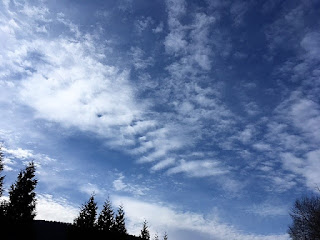
Here's a picture of the sky during the squall.
Birds we've seen so far include: black capped chickadees, tufted titmice, white-breasted nuthatches, northern cardinals, mourning doves, hairy, red bellied, and downy woodpeckers, dark eyed juncos, a song sparrow (we think), and even a blue jay (rare visitors to our yard).
It's estimated over 300,000 people participated in the 2021 count. Will you be one of those participating in 2022?